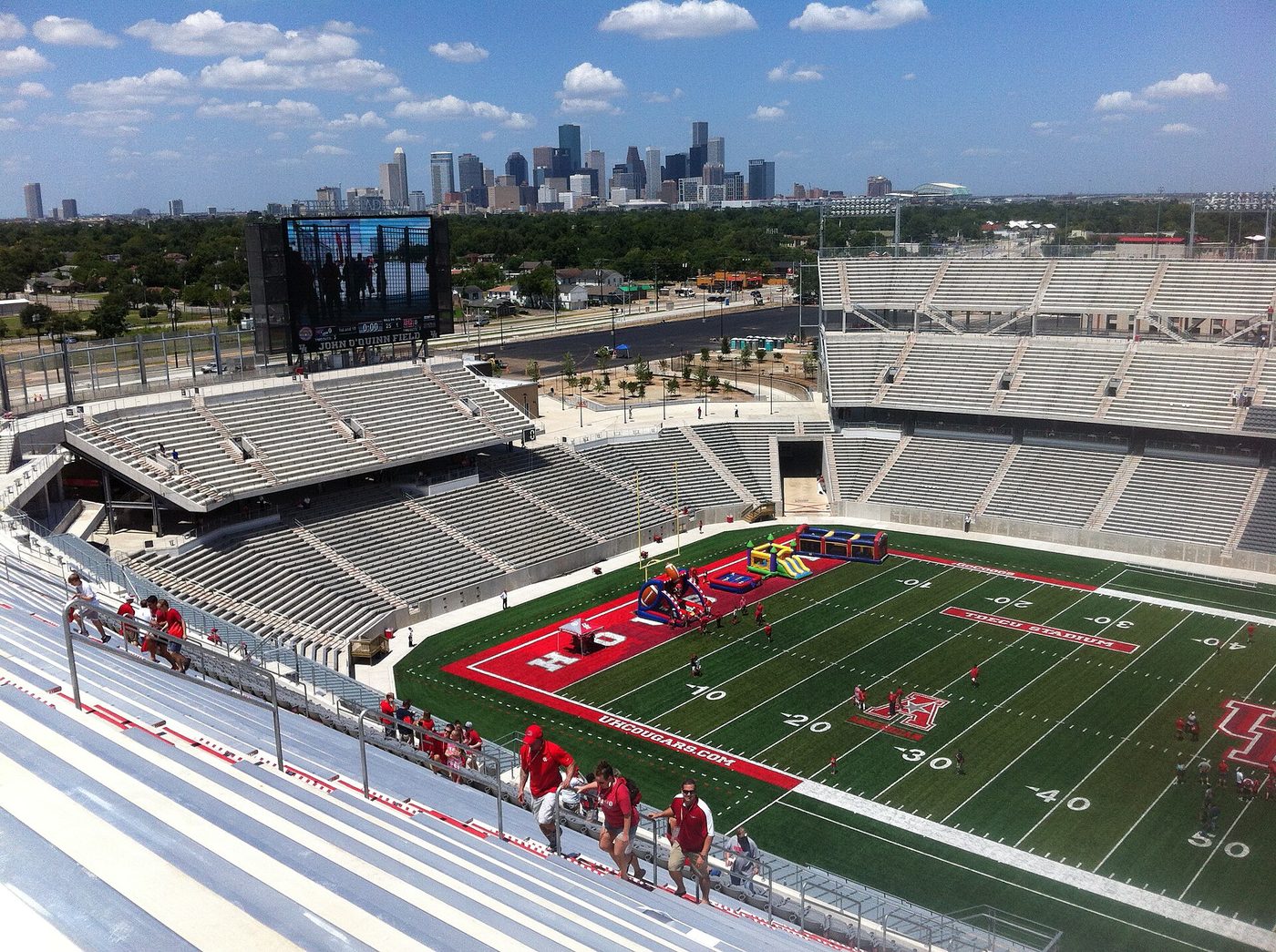
College football owns the whole card today and all three tickets are spreads. Houston hosts Oregon State at 12:00 pm eastern and it carries the biggest number on the card, three units to win at -110. The other two follow it through the afternoon and into the night, Oregon at 3:30 and LSU at 7:30.
Three plays, 7.5 units to win against 8.26 units of risk, which puts the card at a 52.41 percent break even. That is the flattest shape a card can have. Nothing here is priced at -240, nothing needs seventy percent to survive, and no single game holds more than forty percent of the exposure. It is three opinions at roughly the same price, and it lives or dies on whether the opinions are right rather than on whether one expensive favourite holds up.
ON THIS CARD
The Card And The Math
| Play | Price | To Win | Risk |
|---|---|---|---|
| Houston -20.5 | -110 | 3.0 | 3.30 |
| Oregon -24.5 | -112 | 2.5 | 2.80 |
| LSU -10 | -108 | 2.0 | 2.16 |
| Card | 7.50 | 8.26 |
Every price on the card is a minus number, so every unit figure is the amount being won and not the amount being put up. Seven and a half units of profit costs 8.26 units of risk, and on a card of near even money spreads those two columns sit close enough together that the difference stops being the story.
How The Units Are Counted
Houston at -110 needs 52.38 percent to break even on its own. Oregon at -112 needs 52.83. LSU at -108 needs 51.92. The whole card, 8.26 divided by 15.76, is 52.41 percent, which is what happens when you stack three tickets that all cost about the same.
The distribution matters as much as the total. Houston is 39.9 percent of the risk, Oregon 33.9, LSU 26.2. Compare that to a card built around a single -240 favourite, where one game can carry seventy percent of the exposure and the other tickets are decoration. Here, going 2-1 in any combination leaves the day green, and that is the point of building it this way.
Three Units On Houston
Houston -20.5, -110, 3 units. Both teams are 0-0 and there is no 2026 film to read, so this is a bet on what the two rosters did across a full season last year and on the size of the gap between them.
Houston finished 9-3, scoring 28.3 points a game and allowing 21.8. The interesting part is not the record, it is the shape. The Cougars ran for 175.7 yards a game and threw for 215.3, which is a possession offense rather than a track meet offense. Teams built that way shorten games and hold leads, and holding a lead is the exact skill that covering three touchdowns requires. They also closed the season 31-24 at Baylor and 30-27 at UCF, which is a team that finishes road games rather than folding in them.
Oregon State finished 2-10 and it was not a near miss. The Beavers scored 18.2 and allowed 29.4, an eleven point per game hole, and the run to the finish line was the ugly part: 8 points at Washington State, 14 at Tulsa, and a home loss to Sam Houston. Their rushing offense was 123.9 yards a game, which meant the passing game had to carry every drive, and their pass rush produced sixteen sacks in twelve games. Sixteen sacks is not a pass rush, it is a rumour, and the Houston offensive line opens a season without being tested.
Why The Spread And Not The -1600
The Houston moneyline is -1600. That is a 94.1 percent break even and it pays three units for forty eight units of risk, which is not a bet, it is a loan with terrible terms. The spread at -110 pays the same three units for 3.30.
Laying 20.5 asks a different question than laying nothing. It asks Houston to win by three touchdowns against a team that lost by 17, 14 and 8 in its last three games of last season while scoring eight points in one of them. That is the question worth paying for. If you think Houston wins comfortably, the price on the spread is where the opinion actually gets paid, and the moneyline is where it gets buried.
Two And A Half On Oregon
Oregon -24.5, -112, 2.5 units. Oregon went 11-1 last season with a scoring margin of 38.2 to 14.8, and the defensive half of that is what a 24.5 point number is built on. Allowing under fifteen points a game is the profile that lets a team lay three and a half touchdowns without the number feeling silly.
They also ran for 218.4 yards a game, the highest figure of any team on this card. That matters specifically for a large spread. Running teams keep blowouts as blowouts, because they can burn a fourth quarter on the ground instead of handing the ball back and letting a backup quarterback throw his way into a cosmetic cover. Oregon closed last year 42-13 over Minnesota, 42-27 over USC and 26-14 at Washington.
Boise State is the reason this is 2.5 units and not 3.5. The Broncos went 9-4 and scored 31.4 a game, closing 38-21 over UNLV and 25-24 at Utah State. They will move the ball on somebody this season. What they have not shown is a defense that holds up in Eugene, and 23.0 points allowed a game against Mountain West offenses is a softer test than the one waiting for them on Saturday.
Two Units In Death Valley
LSU -10, -108, 2 units. This is the smallest ticket on the card and the one that took the longest to talk myself into. On the raw numbers Clemson is the better offense. The visitors scored 28.7 a game and threw for 274.0, where LSU scored 21.8 on 106.3 rushing yards a game, which is a genuinely poor number for an SEC team.
Two things pull it back toward LSU. The first is defense: 18.3 points allowed a game, the best figure on this card outside of Oregon, built on 27 sacks. The second is the building. A night game in Baton Rouge is worth real points against a visiting team, and Clemson went 7-5 last year while losing five games without ever solving its road profile.
The case against is the Clemson pass rush, 33 sacks, the highest total of the six teams playing on this card. If that travels, an LSU offense that could not run the ball last season is exactly the offense it feasts on. That is a real risk and it is why this is two units instead of three.
What Can Beat This Card
The first thing is the obvious thing. All three tickets are favourites laying points, so a card like this loses on the same day for the same reason. If openers are ragged and favourites sleepwalk, three double digit spreads all die together and 8.26 units go with them. There is no hedge built into this card and I am not pretending there is.
The second is the two large numbers. Houston at 20.5 and Oregon at 24.5 both need three touchdown wins, and a three touchdown win requires the favourite to still be trying in the fourth quarter. Backups come in, play calling goes conservative, and a 45-17 game becomes 45-24 with six minutes of garbage time. That single touchdown is the difference between a winning ticket and a losing one on both of the top two plays.
The third is the LSU rushing offense. 106.3 yards a game is not a number you lay ten points with, and if the Clemson pass rush shows up early that ticket is dead before halftime.
The Opening Week Problem
Every number in this article comes from last season, because that is the only data that exists. All six teams are 0-0. Rosters turn over, coordinators change, quarterbacks leave, and the team that went 2-10 in Corvallis is not literally the same team lining up in Houston.
That is a genuine limitation and it is worth stating plainly rather than dressing up. What last season does tell you is the institutional shape of a program: how it recruits, how it is coached, what it does when a game gets away from it. A program that scored 18.2 a game and lost ten times does not usually reinvent itself over one summer, and a program that went 11-1 while allowing 14.8 does not usually collapse over one either. That is the bet.
Bottom Line
Three spreads, 7.5 units to win, 8.26 at risk, break even at 52.41 percent, and no single game carrying more than forty percent of the day. The case is a 9-3 possession team against a 2-10 team that scored 18.2 a game, an 11-1 team that allowed 14.8 against a Mountain West opponent in Eugene, and a defense and a stadium against a better offense in Baton Rouge, sized smallest because that last one is the closest to a fair fight.
Every one of these three is posted publicly with the price and the unit size before kickoff, and graded on a verified record afterwards. The full record is here, win or lose.
Card FAQ
What are the BetLegend college football plays today?
Three spreads for 7.5 units to win. Houston -20.5 at -110 for 3 units, Oregon -24.5 at -112 for 2.5 units, and LSU -10 at -108 for 2 units.
How are the units counted on this card?
Every price is a minus number, so every unit figure is the amount being won rather than the amount being put up. Houston at -110 costs 3.30 units of risk to win 3. The card lays 8.26 units to win 7.5.
What does this card need to hit to break even?
52.41 percent, which is 8.26 divided by 15.76. Three spreads priced near -110 is the flattest card shape there is, and it is why the break even sits barely above a coin flip instead of up in the sixties.
Why Houston -20.5 instead of the moneyline?
The moneyline is -1600. Laying twenty and a half points at -110 pays 3 units for 3.30 of risk, where the moneyline pays 3 units for 48 units of risk. Against a team that scored 18.2 a game and lost its last three by 17, 14 and 8, the spread is the instrument that actually pays for the opinion.
What is the case against Houston?
Opening week. Both teams are 0-0, there is no 2026 film, and three touchdowns is a real number in a game where a favourite can sit on a lead in the fourth quarter and let a beaten opponent walk into a cosmetic touchdown.
Why is Oregon only 2.5 units at -24.5?
Because Boise State is not a bad team. The Broncos went 9-4 and scored 31.4 a game, and they closed the season 38-21 over UNLV. Oregon allowed 14.8 points a game and that is what the number is built on, but a 9-4 opponent getting three and a half touchdowns is a smaller edge than a 2-10 opponent getting three.
Why lay 10 with LSU when Clemson scored more points last year?
Clemson scored 28.7 to LSU 21.8 and threw for 274.0 a game, and that is the honest argument against this ticket. The other side of it is that LSU allowed 18.3 a game and plays at night in Baton Rouge, and Clemson went 7-5 while never fixing its road profile. It is 2 units and not 3 for exactly that reason.
Where can I see the graded result?
Every play is posted with its price and unit size before kickoff on the verified BetLegend record at trustmyrecord.com, and graded there afterwards whether it wins or loses.