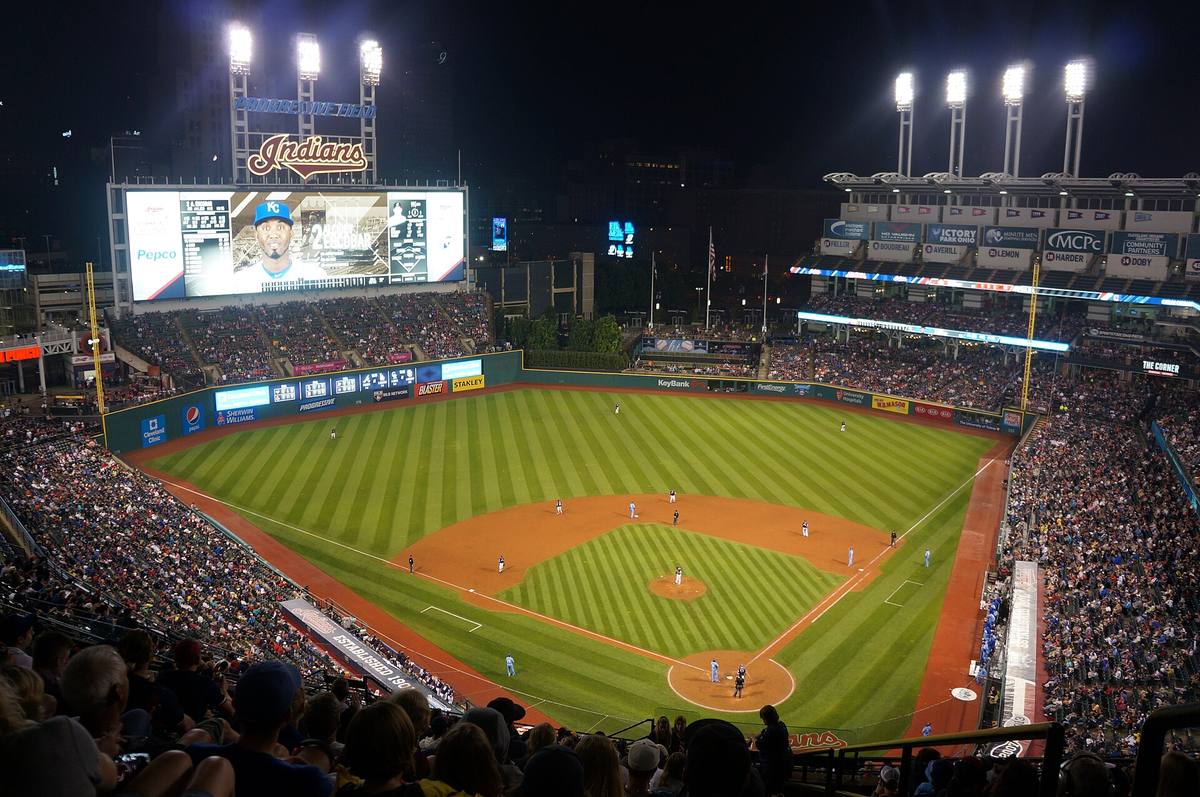
Baseball owns the whole card tonight and five of the six tickets are unders. Detroit at Cleveland, 6:10 pm eastern, carries the biggest number on the card, three units to win at -125. The rest run from 6:05 through 7:15, with the Giants and Mets already under way at 4:10.
Six plays, 11.5 units to win against 14.13 units of risk, which puts the card at a 55.13 percent break even. The shape is flat. The largest ticket is 26.5 percent of the exposure and the smallest is 11.2, so no single game decides the day. Yesterday's card had two legs carrying 62.8 percent between them. This one spreads it.
ON THIS CARD
The Card And The Math
| Play | Price | To Win | Risk |
|---|---|---|---|
| Tigers/Guardians under 7 | -125 | 3.0 | 3.75 |
| Philadelphia Phillies | -154 | 2.0 | 3.08 |
| Rays/Rangers under 7 | -125 | 2.0 | 2.50 |
| Brewers/Reds under 9 | -110 | 1.5 | 1.65 |
| Yankees/Padres under 7 | -105 | 1.5 | 1.58 |
| Giants/Mets over 8 | -105 | 1.5 | 1.58 |
| Card | 11.50 | 14.13 |
Every price on the card is a minus number, so every unit figure is the amount being won and not the amount being put up. Eleven and a half units of profit costs 14.13 units of risk, and the spread between the cheapest price and the most expensive is only 49 cents.
How The Units Are Counted
The two unders at -125 need 55.56 percent each. The Phillies at -154 need 60.63. The Brewers and Reds at -110 need 52.38, and the two -105 tickets need 51.22. The whole card, 14.13 divided by 25.63, is 55.13 percent.
The distribution matters as much as the total. Cleveland is 26.5 percent of the risk, Philadelphia 21.8, Texas 17.7, and the last three are 11.7, 11.2 and 11.2. Going 4-2 in any combination leaves the day about 1.4 units green. Going 3-3 loses roughly 0.6. That is a narrow band, which is what a flat card gives you: fewer disasters and fewer bailouts.
Three Units On The Under In Cleveland
Parker Messick has had the quietest good season in the American League. Twenty seven starts, a 2.46 ERA over 161.0 innings, a 1.02 WHIP, and he is at home at Progressive Field. That is the best starter ERA anywhere on this card.
The other half is the Cleveland lineup, and it is the weakest on the slate. The Guardians are 72-70 and score 4.06 runs a game on a .686 OPS, the lowest of the twelve clubs playing on this card. A total needs both teams to participate. When one of them is the least productive offense on the board and the other has to face a 2.46 ERA, seven is a long way up.
The case against is Framber Valdez, who is the weaker starter here at 4.36 over 150.2 innings with a 1.40 WHIP. Detroit is 64-77 but scores 4.39 a game, better than Cleveland does. If this ticket loses, the Tigers put four or five up early and the Guardians add one late.
Two Units On Rasmussen And deGrom
Drew Rasmussen is at 2.95 over 146.1 innings with a 0.93 WHIP across 26 starts. The WHIP is the number that matters. Under one baserunner an inning across a full season is elite run suppression regardless of what the strikeout column says.
Jacob deGrom is at 4.00 over 137.1 innings with a 1.13 WHIP, which is a higher ERA than his stuff suggests and still the second best arm in this game. Texas is 70-72 and scores 4.11 a game on a 4.29 staff ERA.
The risk is Tampa Bay. The Rays are 84-57 and score 4.50 a game on a .731 OPS, the second best offense on the card. Seven runs between these two starters asks a lot, but if it happens it is the Rays doing most of it.
The Only Side On The Card
Zack Wheeler at home, 23 starts, 3.31 over 130.1 innings with a 1.09 WHIP. That is what is being paid for at -154 and it is not a giveaway, because Martín Pérez has been genuinely good this season at 3.05 over 121.0 innings with a 1.21 WHIP.
Atlanta at 84-57 is the better team on the year and it is not close on run prevention, a 3.57 staff ERA against Philadelphia's 4.00. This ticket is the specific matchup rather than the season. The Phillies at 79-62 score 4.49 a game against Atlanta's 4.67, so the offenses are close enough to call even, and what remains is Wheeler at Citizens Bank Park for one start. At -154 that has to be right 60.63 percent of the time, which is the highest bar on the card.
Under 9 In A Bandbox
This is the leg that looks wrong on paper, so it gets the argument rather than a footnote. Milwaukee is 88-54 and scores 5.04 runs a game on a .739 OPS, the best offensive profile of any club playing tonight, and Great American Ball Park has rewarded that profile for twenty years.
What holds the number is the other three quarters of the game. Milwaukee's staff carries a 3.50 ERA and allows 3.81 runs a game, the second best run prevention on this card. Cincinnati is 67-74 and scores 4.17 on a 4.68 team ERA. For nine to clear, either the Reds find five against a Brewers staff that has not allowed five a game to anybody, or Milwaukee puts up seven or eight on its own. The second is live. The first is the part that usually fails, and a nine run total normally needs both halves to show up.
Dustin May starts for Milwaukee at a 6.41 ERA over 19.2 innings and Andrew Abbott for Cincinnati at 4.49 over 148.1. Neither is the reason for the play. The bullpens are.
Petco And The Only Over
Yankees and Padres under 7 is the cleanest of the six to explain. Petco Park, Robbie Ray at 3.08 over 122.2 innings, Carlos Rodón at 3.20 over 59.0, and the best run prevention team on the card. New York's staff ERA is 3.23 and the Yankees allow 3.72 a game, the lowest figure on this slate. San Diego is at 3.91 and 4.16.
The reason it is 1.5 units and not more is that the offenses do not support it on their own. The Yankees score 4.52 and the Padres 4.23, so season averages alone put this game near 8.75. The park and the two starters are what pull it under seven, not the lineups.
The one over is Giants and Mets at 8, and it exists because San Francisco is not starting a starter. Anthony Molina has 5.0 innings on the season, zero starts, a 5.40 ERA and a 1.40 WHIP. That is a bullpen day. San Francisco is 58-84 with a 4.40 staff ERA allowing 4.71 runs a game, the worst run prevention on the card. Zac Thornton is the better arm at 2.93 over 61.1 innings, so the Mets half is suppressed and the Giants half is not.
Five Unders Is Not One Bet
The standard objection to a card like this is that five unders on one night is really one bet, because run scoring rises and falls across the whole league together. It is a confident claim and it is testable, so it got tested rather than repeated.
Across 2,122 games of the 2026 regular season through September 4, the intraclass correlation of combined runs within a calendar date is 0.0056. A permutation test that reshuffles every game at random across the same slate shapes returns p equal to 0.31, meaning roughly one random season in three looks at least as clustered as the real one. Drawing five games at random from a single slate, all five finish under 8.5 3.44 percent of the time against an independent 3.40. The daily share of games going under has actually bounced around slightly less than independence predicts.
So this is six bets, not one. What does move is the season, not the night: May averaged 8.61 combined runs and June averaged 9.35. If four of these lose tonight it will be four wrong opinions, and there is no shared condition to blame it on.
Bottom Line
Eleven and a half units to win against 14.13 at risk, needing 55.13 percent. The three unit under in Cleveland is the one with the most behind it: the best starter ERA on the card at home against the weakest offense on the card. The Phillies at -154 is the most expensive ticket and the only side. The Brewers and Reds under 9 is the one that will look wrong until the sixth inning.
All six were on the verified record with their prices before first pitch, and all six get graded there whether they win or lose.
Card FAQ
What are the BetLegend MLB plays today?
Six plays for 11.5 units to win. Tigers and Guardians under 7 at -125 for 3 units, Rays and Rangers under 7 at -125 for 2 units, Phillies at -154 for 2 units, Brewers and Reds under 9 at -110 for 1.5 units, Yankees and Padres under 7 at -105 for 1.5 units, and Giants and Mets over 8 at -105 for 1.5 units.
How are the units counted on this card?
Every price is a minus number, so every unit figure is the amount being won rather than the amount being put up. The under 7 at -125 costs 3.75 units of risk to win 3. The card lays 14.13 units to win 11.5.
What does this card need to hit to break even?
55.13 percent, which is 14.13 divided by 25.63. The largest single ticket is only 26.5 percent of the risk, so no one game decides the day.
Why is the Tigers and Guardians under the biggest play?
Parker Messick has a 2.46 ERA over 161.0 innings with a 1.02 WHIP across 27 starts and he is at home, and Cleveland scores 4.06 runs a game on a .686 OPS, the weakest offense among the twelve clubs on this card. The case against is Framber Valdez at a 4.36 ERA and a 1.40 WHIP.
Why take an under 9 at Great American Ball Park against the Brewers?
Milwaukee scores 5.04 runs a game, the best rate in baseball, and that is the honest argument against it. Milwaukee also allows 3.81 a game on a 3.50 staff ERA, and Cincinnati scores 4.17. The Reds have to find five against that staff for the total to clear.
Is holding five unders on one night really one bet?
No, and it is worth checking rather than assuming. Across 2,122 games of the 2026 season the intraclass correlation of combined runs within a date is 0.0056 and a permutation test returns p equal to 0.31. Five games drawn from a single slate all finish under 8.5 3.44 percent of the time against an independent 3.40.
Why is the Giants and Mets over the only over on the card?
San Francisco is starting Anthony Molina, who has 5.0 innings on the season and zero starts, which is a bullpen day. San Francisco also allows 4.71 runs a game, the worst run prevention figure on this card.
Where can I see the graded result?
Every play is posted with its price and unit size before first pitch on the verified BetLegend record at trustmyrecord.com, and graded there afterwards whether it wins or loses.