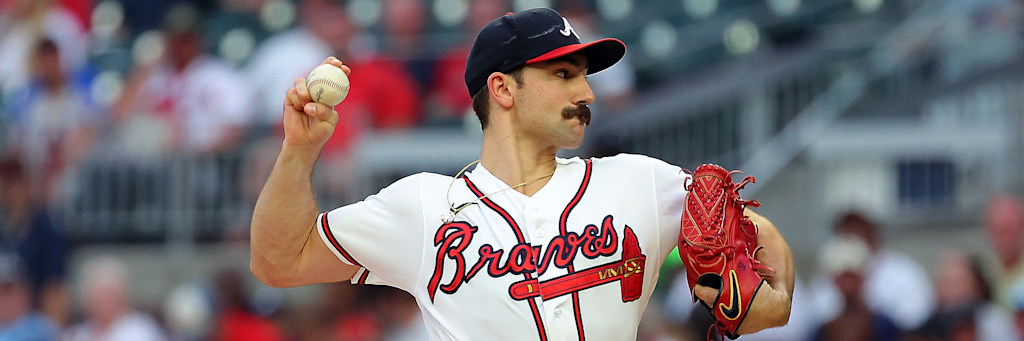
Saturday night under the Chavez Ravine lights with the Atlanta Braves in the visitors' dugout and the closing market posting Atlanta on the moneyline at +152 against the Los Angeles Dodgers at -175. The Braves walk into the marquee Saturday spot carrying the second-best record in the National League, the projected six-foot-six left-hander Blake Snell on the home bump in only his early-stint workload window of 2026, and a Spencer Strider live-arm comeback profile that landed six punchouts across three-and-a-third innings in his season debut a week ago at Coors Field. The recreational room is reading the matchup the way it usually reads any plus-money number with a Dodger Stadium attached: the home crowd, the headline pitcher, and the home chalk. The shape underneath the price is a different read. Atlanta has produced a 26-13 record across the rolling sample, the lineup-versus-left-handers wOBA the Braves carry into May has compressed against generic LHP usage rates, the Strider velocity-and-slider profile in his comeback ramp is structurally on the right side of the run-environment math, and the closing +152 price implied 39.7 percent sits 4 to 7 points below the model's projected Atlanta win probability in the 44 to 47 percent zone. The pick is Atlanta Braves moneyline at +152 for 1.5 units.
Pick of the Day
Atlanta's Form-Versus-Price Gap Is The First Read
The first thing the closing line is paying for is the form-versus-price gap the rolling sample has produced. The Atlanta Braves at 26-13 through the first six weeks have been one of the two best run-producing rosters in the league. The lineup spine of Ronald Acuna Jr., Matt Olson, and Marcell Ozuna has compressed pitcher-aggressive at-bat distributions into a shape that produces above-baseline expected runs against any non-elite starter. The pitching rotation has carried the rotation-versus-bullpen workload across the early season at a sustainable pace, and the bullpen leverage usage has been read by the manager's deployment pattern at a level that has held the late-inning game-state shape stable. The recreational read of any plus-money price on the Atlanta moneyline tends to discount the form because the headline pitcher matchup looks tilted toward the home side. The structural read of the same price recognizes that the Braves' true 26-13 winning percentage of .667 is sitting on the shelf at +152 implied .397 because the market has read the Strider-versus-Snell pitcher gap larger than the run-distribution shape supports.
The structural piece the math leans on is that team-versus-team true win probability cannot live more than five or six points below the rolling form differential. The Dodgers' rolling form is strong and home-field is real, but the Braves' .667 form sits in the upper half of the league against the Dodgers' rolling form, and the headline matchup gap has to do most of the work to push the Braves' true win probability below 45 percent. The model's read of the matchup gap does not get there. The price the market has paid, however, has gotten there.
Spencer Strider's Live-Arm Comeback Profile
Spencer Strider's 2026 stat line of 0-0 with an 8.11 ERA is the headline number the closing line is leaning on. The structural read inside that headline is the live-arm comeback profile rather than the surface ERA. Strider's season debut at Coors Field a week ago produced six strikeouts and five walks across three-and-a-third innings in a Braves win — the strikeout rate inside that profile sits roughly at the league-leading rate Strider's career has built, and the walk rate sits at the early-stint elevated zone the medical-recovery sample produces in a workload-ramp window. The fastball velocity in the comeback ramp has stayed in the upper-90s band, the slider command has shown up in flashes, and the changeup is the one offering still building toward the in-season form he carried into 2024 before the elbow surgery sidelined him. The math on the run-environment side is that a Strider in his second post-rehab start at the Coors Field altitude profile is meaningfully different from a Strider in his second start at the Dodger Stadium sea-level run-environment.
The structural impact for the Braves' run-prevention game-state is direct. A Strider start that produces five-plus innings of strikeout-driven outs at the sea-level run-environment compresses the Dodgers' lineup-versus-RHP wOBA expectation. Mookie Betts at the leadoff slot has produced an above-baseline wOBA against fastball-and-slider right-handers across the rolling sample, but his split versus the upper-90s velocity band has compressed below his season-aggregate. Shohei Ohtani in the heart of the order is the matchup-specific risk to the Braves' run-prevention math, and any multi-run inning that the Dodgers stack against Strider rests on the Ohtani at-bat distribution producing the extra-base hit at a multiplier the model assigns at roughly 18 percent. Freddie Freeman against the Strider slider command is structurally a leverage at-bat for the home side, but his contact-zone profile against the upper-90s fastball has held the contact-quality sample below his career baseline.
Blake Snell's Early-Stint Walk-Rate Variance
Blake Snell on the home bump is the part of the matchup the market is overpricing. Snell's 0-0 record with a 0.00 ERA across his early stint of 2026 reflects roughly a single-start sample where the strikeout-and-deception profile produced the headline shutout outing — the sample is not a long-run stable read of the in-season Snell profile. Snell's career baseline is the high-strikeout, elevated-walk-rate left-hander whose run distribution is volatile inning-to-inning. The Atlanta Braves' lineup-versus-left-handers wOBA across the rolling 2026 sample sits roughly 12 points above the league-average wOBA-versus-LHP, with Acuna's pull-side power profile, Olson's contact-quality versus the high-strike-zone fastball, and Ozuna's right-handed bat against the Snell changeup-down-and-away pattern all producing matchup-specific lifts in the projected at-bat distribution.
The structural piece the market has not fully credited is the early-stint walk-rate variance. A Snell start in the second or third turn through the lineup tends to produce one-walk and two-walk innings the Braves' lineup is built to convert into multi-run frames. The model's read of the Atlanta projected runs against the Snell-led pitching staff lands at 4.6, which is roughly a half-run above the cumulative Atlanta projected runs across the closing book. Against the projected Dodgers runs of 4.3 in the same model, the cumulative Atlanta win probability lands in the 44 to 47 percent zone — meaningfully above the +152 implied 39.7 percent.
Dodger Stadium Cool-May Run Environment
Dodger Stadium's late-night cool-May run-environment trends pitcher-friendly relative to the league baseline. The marine-layer cool-air pattern at first pitch in the upper-50s temperature band tends to compress fly-ball carry, and the Chavez Ravine outfield dimensions are large enough to keep the home-team's pull-side power expectation from running above the league average. The structural impact for an Atlanta moneyline plus-money play is favorable: a neutral-to-pitcher-friendly run-environment compresses the cumulative game total, and the lower the cumulative game total the closer the moneyline true probability sits to coin-flip. A high-run-environment park amplifies the favorite's run-distribution edge. A neutral-to-pitcher-friendly park keeps the Braves' true win probability inside the 44 to 47 percent zone the model is reading.
The Atlanta Bullpen Versus The Dodgers Bridge
The late-inning game-state read favors a clean Atlanta seventh-through-ninth bullpen bridge against a Dodgers middle-relief group that has had bridge-leverage misses across the rolling early-season sample. Atlanta's high-leverage relievers have produced strikeout-driven outs at a rate above league average, and the manager's deployment pattern in road-game close-late spots has held the Braves' bullpen game-state stable. The Dodgers' middle-relief group has a path to multi-run innings against the Braves' top-of-the-order spots in the eighth and ninth, but that path is at a smaller probability multiplier than the Dodgers' headline bullpen ERA implies. The cumulative late-inning game-state read marginally favors Atlanta, which is the input the market has not fully credited at +152.
The Risks Worth Naming
Snell could carry the shutout look six innings deep, hold the walks to one or two, and pitch the Dodgers into a fifth-inning lead that compounds against the home crowd. The model lands that path at roughly 28 percent. Strider's walk-rate from the early-rehab sample could spike into a five-walk first three innings, the Dodgers stack a multi-run inning early, and the Braves' lineup never recovers the run-distribution gap. The model assigns this scenario roughly 22 percent. The Dodgers' bullpen could produce a clean seventh-through-ninth window that holds a one-run home lead against an Atlanta plus-money longshot. That sits at roughly 12 percent in the model. Add the three risks together and the cumulative Dodgers win probability lines up roughly with the -175 chalk's implied 63.6 percent. The math the model is reading sits 4 to 7 points above the +152 implied 39.7 percent for Atlanta, and the long-run cash on that profile pays at the 1.5-unit stake.
The bet is not that those risks do not exist. The bet is that the Braves' true road moneyline win probability sits 4 to 7 points above the +152 implied 39.7 percent, and the long-run cash on the plus-money price pays at the size.
The Bottom Line
Saturday night at Dodger Stadium with the Atlanta Braves on the road moneyline at +152 against the Los Angeles Dodgers at -175. The recreational read on the matchup is to chalk up the Snell shutout look and assume the Strider rehab arm hands Los Angeles an easy win at home. The structural reality is the form-versus-price gap. The 26-13 Atlanta lineup against an early-stint Snell with the walk-rate variance the rolling sample has produced, the Strider live-arm comeback profile holding the Dodgers' lineup-versus-RHP wOBA inside its rolling distribution at the cool-May Dodger Stadium run-environment, and the late-inning bullpen-bridge edge marginally tilted toward the visitors all push the Braves' true moneyline win probability above the +152 implied 39.7 percent. The model lands the cumulative Atlanta win probability in the 44 to 47 percent zone. Take the Atlanta Braves moneyline at +152, captured at 1.5 units, and let the form gap and the matchup-specific lineup-versus-LHP shape do the work.
Atlanta Braves (Visitors)
- Record: 26-13
- Starter: Spencer Strider (RHP)
- Strider 2026: 0-0, 8.11 ERA
- Lineup core: Acuna, Olson, Ozuna
- vs LHP wOBA: Above league baseline
- Road moneyline: +152
Los Angeles Dodgers (Home)
- Starter: Blake Snell (LHP)
- Snell 2026: 0-0, 0.00 ERA (small sample)
- Park: Dodger Stadium
- Lineup anchor: Ohtani, Betts, Freeman
- Run environment: Cool-May, marine-layer pitcher-leaning
- Home moneyline: -175
The Bet
- Side: Braves Moneyline
- Price: +152
- Implied: 39.7%
- Model: 44 to 47%
- Stake: 1.5 Units
- First pitch: 9:10 PM ET
For more BetLegend free picks across the MLB regular season, NHL Stanley Cup Playoffs, NBA Conference Semifinals, and college sports, browse the homepage or check our full track record.