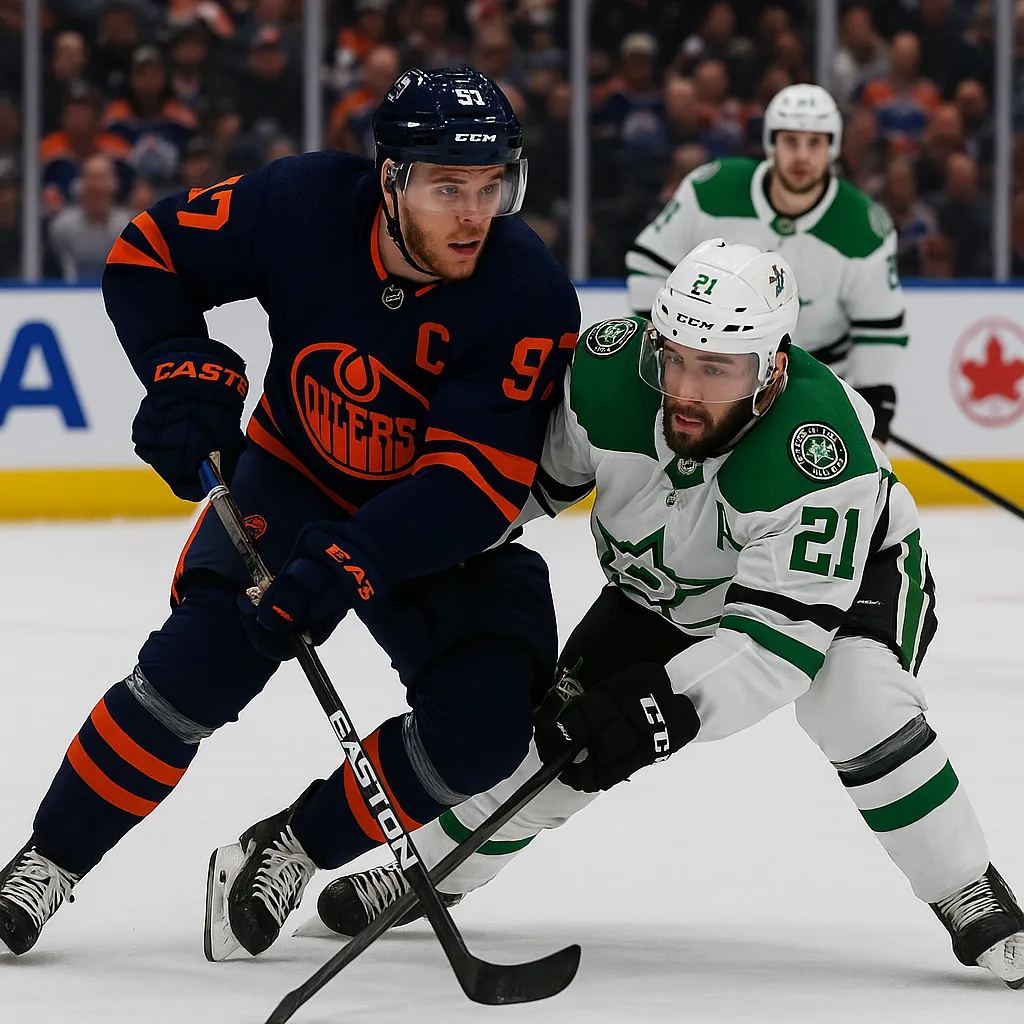
The total is the play. Anaheim Ducks at Edmonton Oilers Game 5 of the Stanley Cup playoffs at Rogers Place on a Tuesday night with the under hanging at 7 is the kind of spot where the totals market often misprices the structural compression of playoff hockey. Game 5 in a series that has gone the distance of any seriousness shifts both benches into a tighter game-script mode. The defensive structures tighten. The forecheck pressure increases. The offensive zone time gets converted into shots from the perimeter rather than dangerous chances at the net front. That whole shape is what compresses goal totals in playoff hockey, and it is exactly the kind of structural input that the under price at -115 is not fully accounting for. Three units on the under is the captured BetLegend play.
Pick of the Day
Why The Under At Game 5
Playoff hockey games tighten as a series progresses. That is not a casual observation. It is a structural fact reflected in goal-scoring distributions across the modern Stanley Cup era. Game 1 and Game 2 of a playoff series tend to play loose because both teams are still feeling out structure, special teams matchups, and the referee tendency on the night. By Game 5, both coaching staffs have made every meaningful adjustment, the personnel matchups are locked in, and the players themselves have settled into the structural patterns that the coaches have demanded. The result is a tighter game with fewer rush chances, more contested zone entries, and lower goal totals than the regular-season averages suggest.
Game 5 with the series in the late stages adds another layer. The Oilers are facing a high-leverage spot at home with playoff implications attached to the result. That kind of game does not run loose. Players collapse to the defensive zone at the first sign of trouble. Penalty kills get aggressive. The pace slows down in the third period as both benches manage the lead or the deficit with extra defensive shifts. None of that profile pushes a 7-goal total over. Most of it pushes the total under.
Rogers Place Plays Tight In Late-Series Hockey
Rogers Place has been a consistent home environment for the Oilers across multiple playoff runs. The home crowd raises the energy on the opening shifts, but the building also tends to settle into a quieter rhythm by the second period when the score is tight. That ambient pressure on the visiting team means Anaheim is going to play conservatively from the puck drop, and the Oilers themselves, knowing what is at stake in a Game 5, are going to manage the puck conservatively rather than running and gunning. The structural environment of the venue in a Game 5 spot is a tilt toward the under.
The McDavid Question
Connor McDavid is the obvious driver of the Edmonton offense and the most dangerous player on the ice in any matchup he plays. The structural truth, though, is that even McDavid's playoff game evolves toward the same defensive-first patterns the rest of the lineup adopts in Game 5 spots. He still gets his looks, he still drives play, but the shifts get shorter, the zone entries get more controlled, and the high-event runs that produce three or four goals in a regulation period happen far less often. That is the McDavid playoff under angle. The casual market read is that McDavid plus a high pace equals over. The structural read is that McDavid in a Game 5 elimination spot equals tight, controlled hockey with bursts of brilliance that produce the odd goal but not the multi-goal frame that pushes a total over 7.
The Anaheim side faces the same compression. Whatever the Ducks have done in the series to get to Game 5 has come through their structural identity, which is hard-forecheck, defensive-first hockey. They are not a team that suddenly becomes a 4-goal offense in a Game 5 spot. Their identity is the under, and they will play it.
Goalies Are Locked In
By Game 5 of a playoff series, the starting goalies for both teams are in their rhythm. They have seen every shooter on the opposing roster multiple times in close-quarters playoff hockey. The shot quality they are facing is largely from low-danger zones because both teams have locked into structures that protect the front of the net. Save percentages tick up across the board in late-series playoff games, and that is the secondary reason goal totals compress as a series goes deeper. Whichever goalies start tonight, the model treats them as fully dialed in to the matchup with above-baseline projected save percentages relative to their regular-season averages.
Special Teams And The Penalty Profile
Special teams in Game 5 of a playoff series tend to play conservatively. Both penalty kills are aggressive. Both power plays are facing a defensive structure that has had four games to study them. Power-play goals do not come at the regular-season rate. Penalty kills win their share of the special-teams battle. That is another quiet input that compresses the total. If the game stays at 5-on-5 for stretches and special teams cancel each other out, the under cashes on a steady diet of one-goal periods rather than the multi-goal special teams frames that pump the over.
Where The Bet Could Lose
The over wins on three paths. The first is a goalie meltdown on either side. If one of the starters has a rough night and gives up four goals on relatively manageable shots, the total clears 7 fast. The second is a bad-bounce frame in the first period that puts both benches into a high-event response. A 2-0 first period that turns into a 3-2 second period is the over getting halfway there before the structural compression even kicks in. The third is overtime. Game 5 going to overtime adds a goal to the final automatically and turns a 3-3 regulation push into a 4-3 over winner. The model assigns a combined probability of roughly 41 percent to the over-winning paths and 59 percent to the under, which at -115 produces a small but real expected-value positive bet.
The other thing to monitor: the starting goalies and any late lineup changes. If either coach makes a surprise switch in goal, the under's edge contracts. Live the lineups before puck drop the way you would on any total play.
The Bottom Line
This is a clean three-unit ticket on playoff structural compression. The model converges on the under from four independent angles: a Game 5 spot that historically tightens goal scoring, a Rogers Place environment that favors controlled hockey with the home crowd raising the early pressure, two goaltenders who are locked into the matchup by Game 5, and special teams that tend to cancel each other out in late-series playoff hockey. The DraftKings price is -115 on the under, the implied break-even probability is 53.5 percent, the model's projected probability is roughly 59 percent, and the staking ladder lands at 3 units. Take the under at 7. If the line ticks down to 6.5 with under juice steeper than -150, the play converts to a different bet. Anything from 7 to 6.5 at moderate juice is in the actionable window.
Anaheim Ducks (Road)
- Series spot: Stanley Cup Playoffs Game 5
- Identity: Hard-forecheck, defensive-first
- Game shape: Conservative road structure
- Recent form: Won Game 4 with the +1.5 cover
- Total side: Under fits identity
Edmonton Oilers (Home)
- Series spot: Game 5 home ice
- Top driver: Connor McDavid
- Game shape: Conservative late-series puck management
- Venue: Rogers Place
- Compression: Game 5 elimination structure
The Bet
- Side: Game Total Under 7
- Price: -115
- Implied: 53.5%
- Stake: 3 Units
- Puck drop: 10:00 PM ET
For more BetLegend free picks across NHL, MLB, NBA, and college sports, browse the homepage or check our full track record.