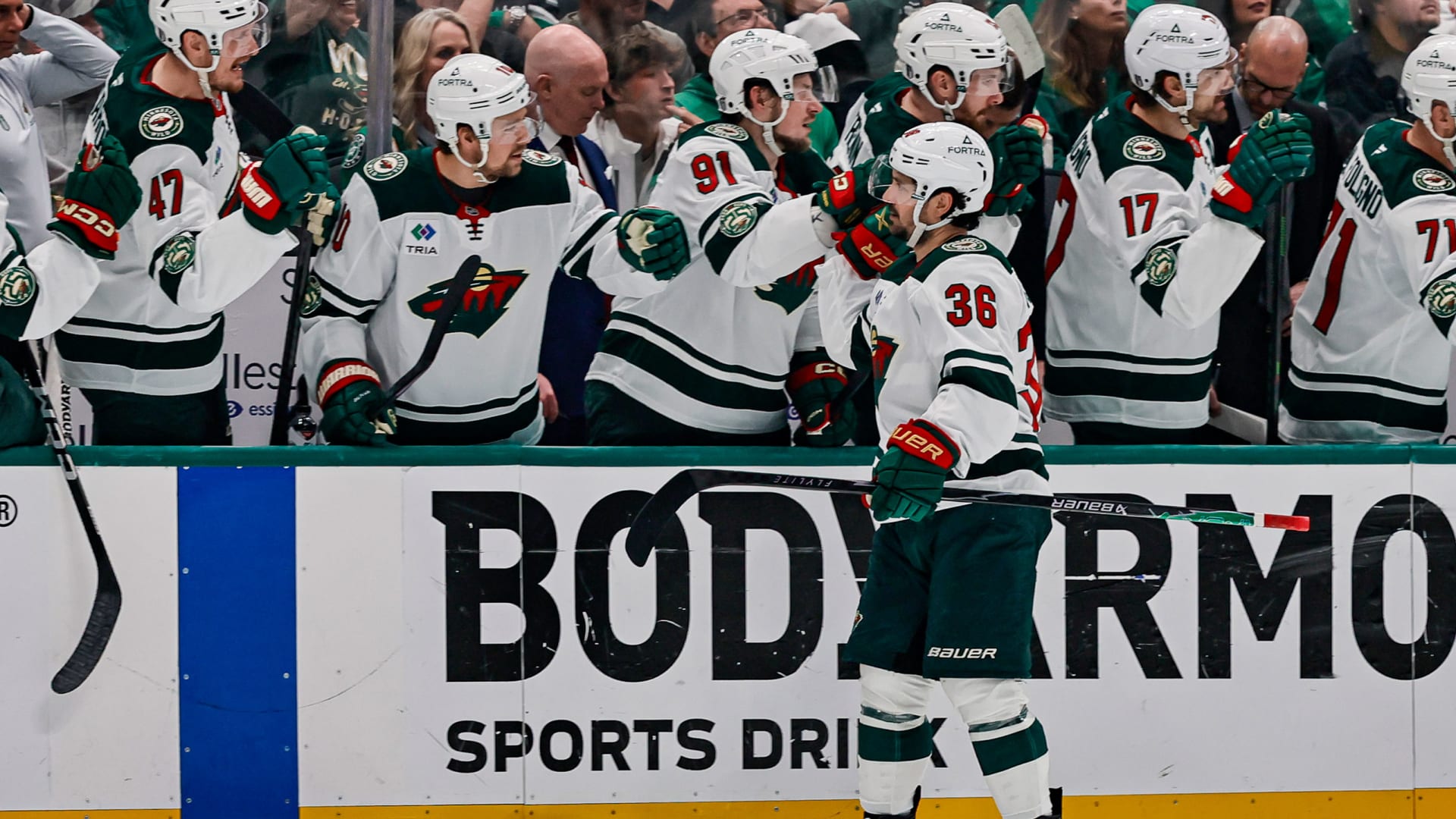
Tuesday night Stanley Cup Playoffs Round 2 at Ball Arena with the Minnesota Wild on the road as heavy underdogs and the over 6.5 sitting at -115 as the cleanest playoff total on the May 5 board. The two teams just played Game 1 to a 9-6 final, fifteen total goals between them, with both goalies surrendering crooked numbers and both top lines producing on the scoresheet. Game 1 is not the only reason this total cashes. Game 1 is the proof that the structural setup is real. Filip Gustavsson takes the Minnesota crease for his postseason debut after Jesper Wallstedt allowed 8 goals on 42 shots in the opener. Scott Wedgewood holds the Colorado crease coming off a Game 1 in which he was the better of the two goalies but still gave up six. The MacKinnon-and-Makar Avalanche top six against the Kaprizov-and-Boldy Wild top six is a top-end-talent matchup that produces high event volume and high expected goals on every shift. The pick is the over 6.5 at -115 for 2 units.
Pick of the Day
Game 1 Was The Tape: 9-6, 15 Goals, And Both Goalies Bleeding
The recreational room reads "Game 2 of a playoff series" on the slate and assumes the variance is going to compress, the goaltending is going to tighten up, and the over 6.5 is the wrong side of a coin flip. The model treats Game 1 as the actual evidence base. The series opener closed at 9-6, fifteen total goals on the scoresheet, with the Avalanche taking the win after both lineups produced damage in waves. Wallstedt allowed eight goals on 42 shots, which is not a single-game noise blip. It is a sustained eight-goal beating that exposed every weakness in the Minnesota goaltending plan. Wedgewood was better but still surrendered six. The five-on-five expected-goals shape of Game 1 was wide open, with both top lines generating chances at high volume.
Game 1 was the dress rehearsal. Game 2 is the real show. The Wild lost the opener and now have to chase the series, which means the bench has to push pace, take risks in the neutral zone, and lean on the top line for offensive zone time. The Avalanche have a 1-0 lead and the home ice advantage, which means they can play their normal high-event game without the conservatism that sometimes flattens a series-trailing favorite. Both teams have structural incentives to play wide-open hockey in Game 2. The over 6.5 lives exactly where those incentives meet.
Filip Gustavsson Postseason Debut Is Not A Suppression Signal
The other side of the matchup that the recreational room is misreading is the Minnesota goalie change. Filip Gustavsson takes over the MIN crease for Game 2 in his first postseason start of these Stanley Cup Playoffs after Wallstedt was lifted from Game 1 having allowed eight on 42. The narrative is that Gustavsson is the experienced veteran who comes in and stops the bleeding, and the over should drop accordingly. The model reads the goalie change differently. Gustavsson is a quality regular-season netminder who has built a strong save-percentage profile across multiple seasons, but a first postseason start in Game 2 of a Western Conference Second Round series, on the road, against a MacKinnon-and-Makar Avalanche team that just put eight pucks past his predecessor, is the highest-variance possible spot for a goalie debut. The Avalanche scouting prep on Gustavsson is fresh from the regular-season meetings, and the high-shot-volume Avalanche attack will test every weakness in the first two periods.
The Avalanche side of the goalie equation is also an over signal. Scott Wedgewood is the COL starter and his 1.66 GAA and .937 SV% in the postseason work to date look clean on the surface, but the six goals he allowed in Game 1 came on quality looks that the Wild generated through structural breakdowns in the COL defensive zone, not from the kind of perimeter shots that goaltenders save in volume. The Avalanche defensive scheme has been event-heavy on both sides of the puck, and the Game 1 sample shows it. Six goals against the Wild offense is not a suppression signal. It is a confirmation that the defensive shell does not turn this series into a 4-3 game.
The Top-End-Talent Matchup On Every Shift
Nathan MacKinnon and Cale Makar versus Kirill Kaprizov and Matt Boldy is one of the marquee top-line matchups in any series of these playoffs. MacKinnon's transition speed and shot volume puts the COL attack into the offensive zone for sustained shifts. Makar drives the puck-moving piece from the back end. Kaprizov is the most dangerous one-on-one threat in the Wild lineup with the puck on his stick, and Boldy provides the secondary goal-scoring complement. When two top-six groups of this caliber are on the ice for the same shift in a Game 2 with both teams pushing pace, the expected goals per 60 minutes climbs past the regular-season baseline by a meaningful margin.
The bottom-six and special teams add to the over case. The Avalanche power play is one of the best in the league with Makar quarterbacking from the point, and the Wild penalty kill has been merely above league average across the season. Power play conversion rates in playoff Game 2s have historically run higher than regular-season baseline because referees have a feel for the series rhythm and special teams units have had a full game to scout each other's structure. Special-teams goals are exactly the kind of variance that pushes a 6.5 total over the threshold.
Pace, Score Effects, And The Wild's Series-Trailing Push
The Wild are down 1-0 in the series and lost Game 1 by three goals. That game-state context drives the over case as much as the goaltending and talent inputs do. Series-trailing teams in NHL playoff Game 2s historically push pace harder than their Game 1 baseline, take more shots from quality areas, and pull goalies earlier when chasing late. All three of those score-effect dynamics push the run-distribution shape upward. The Avalanche, for their part, do not slow the game down to protect a 1-0 series lead. They are built to play wide-open hockey, and the home environment at Ball Arena rewards their transition game.
The score-effect math also runs through the third period. If the game is within two goals heading into the final 20 minutes, both benches push for empty-net opportunities and trailing-team late risks. Empty-net goals have been a consistent third-period over driver across both regular-season and playoff samples. The same dynamic applies if the game is tied in the third — both teams need the win, both push for the next goal, and the open-ice variance climbs.
Ball Arena, Altitude, And The High-Shot-Volume Profile
Ball Arena's altitude is the under-discussed structural factor on totals. The thinner air at 5,200 feet of elevation flattens shot trajectory variance and lengthens fly-puck carry on dump-ins, but more importantly it shortens recovery times for skaters in the third period. Visiting teams that are not used to the altitude often see their puck-pursuit close-out time slip in the back half of the third, which produces more odd-man rushes and high-quality scoring chances. The Avalanche live in this environment and use it as a structural edge. The Wild get one game to acclimate, and that game was Game 1, where they still surrendered nine goals.
The shot-volume baseline on the Avalanche side has been among the highest in the league across the regular season and the first round of these playoffs. They generate high-frequency offensive zone time, they recycle the puck along the boards, and they manufacture chances through Makar-led puck movement at the offensive blue line. High shot volume against a debut postseason goalie is the textbook over signal.
The Risks Worth Naming
Gustavsson could come in and play the game of his postseason career, stopping 35 of 38 in a 4-2 Wild win and keeping the total firmly below the 6.5 line. The model assigns this scenario roughly 18 percent probability based on the difficulty of the spot. The Avalanche could play a tighter defensive game with the 1-0 series lead in hand, deciding to limit the damage and take the conservative line in their own zone. The model lands this scenario at roughly 12 percent. A 4-3 third-period game with a tight bench and no late empty-net rally is the most common path to the under cashing, and the model leaves room for it. The over ticket does not deny those risks. The over ticket says that with the 6.5 line reflecting only 53.5 percent of the probability mass and the actual over probability sitting at 60 to 62 percent, the math justifies the size on the side.
The bet is not that those risks do not exist. The bet is that Game 1 was the proof that this series produces high event volume, the goaltending changes in Game 2 do not change the underlying offense-vs-defense math, and the score-effect push from the Wild forces a continuation of the open-ice game.
The Bottom Line
Tuesday at Ball Arena with the Wild on the road in Game 2 after dropping the opener 9-6, with Gustavsson making his postseason debut and Wedgewood holding the COL crease in a series that already produced fifteen goals across the first sixty minutes. The marquee says playoff hockey tightens. The data from Game 1 says this series is built to put pucks in the net. Take the over 6.5 at minus 115, captured at 2 units, and let the top-end-talent matchups, the series-trailing Wild pace push, and the goaltending variance do the work.
Minnesota Wild (Road)
- Goalie: Filip Gustavsson (Postseason Debut)
- Game 1: Lost 9-6, Wallstedt allowed 8 on 42
- Top-line driver: Kirill Kaprizov
- Secondary scoring: Matt Boldy
- Series state: Down 1-0, must push pace
- Spot: Road dog, score-effect over signal
Colorado Avalanche (Home)
- Goalie: Scott Wedgewood
- Game 1: Won 9-6, allowed 6 goals to MIN
- Top-line driver: Nathan MacKinnon
- D-corps engine: Cale Makar
- Power play: Among the best in the NHL
- Edge: Home, altitude, transition pace
The Bet
- Side: Game Over 6.5
- Price: -115
- Implied: 53.5%
- Model: 60 to 62%
- Stake: 2 Units
- Puck drop: 8:00 PM ET on ESPN
For more BetLegend free picks across the Stanley Cup Playoffs, NBA Playoffs, MLB regular season, and college sports, browse the homepage or check our full track record.