 Bet
Bet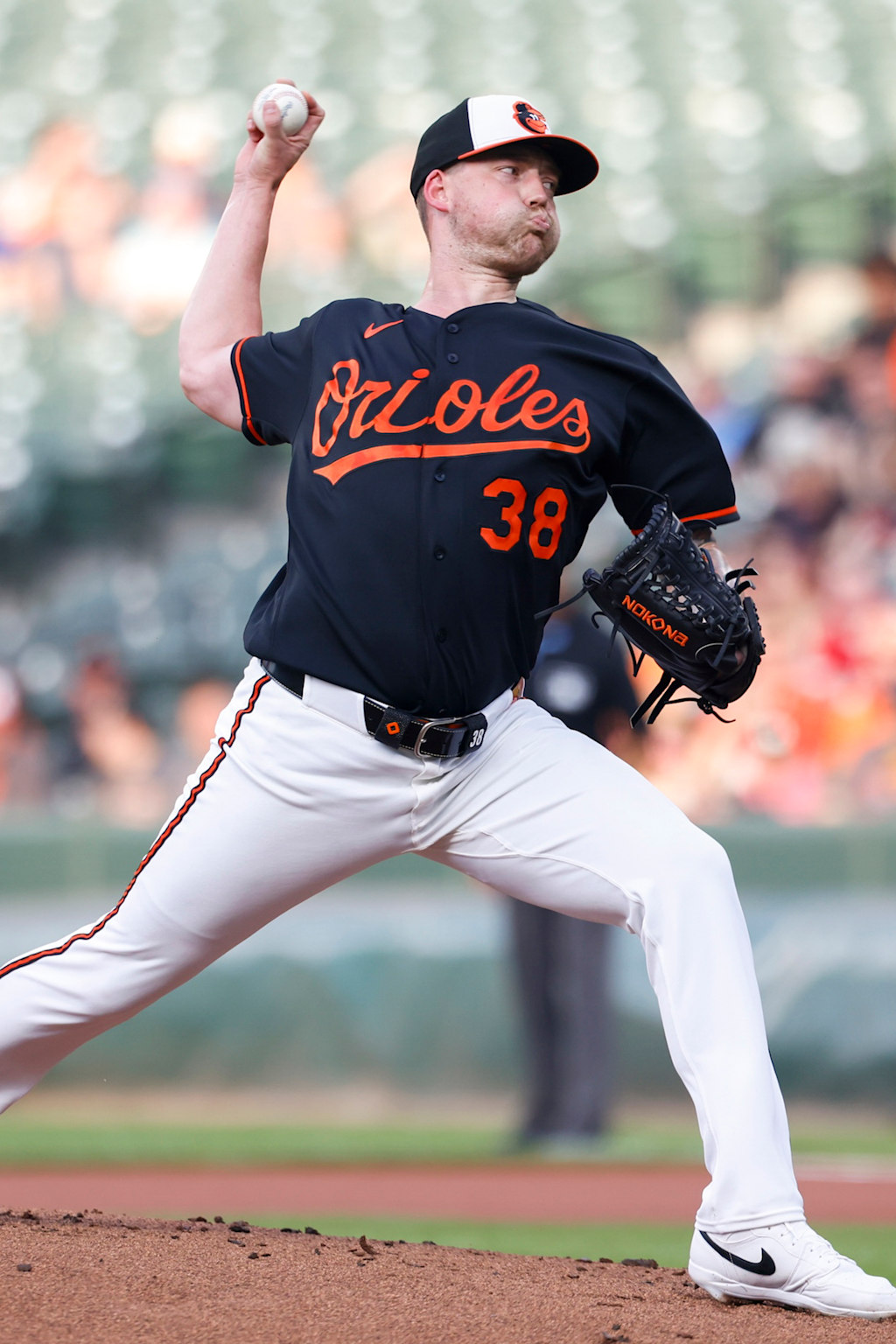

Orioles @ Red Sox
Tuesday, 7:10 PM ET | Fenway Park, Boston, MA | MASN / NESN
On July 1 the Red Sox lost 10-2 at home to Washington and looked like a team drifting toward a quiet trade deadline. They have not lost since. Fourteen consecutive wins later, Boston sits at 51-48, six games behind Tampa Bay in the American League East and back inside a race that had effectively closed on them.
The streak is not a series of one-run escapes either. It opened 5-2 at the Angels on July 3, ran through sweeps of the Angels, the White Sox and the Mets, and resumed after the All-Star break with a four-game demolition of Tampa Bay that included a 10-0 shutout on July 17. Monday night Baltimore pushed them hardest of anyone, losing 6-5. Boston is 10-0 in its last ten and has scored 419 runs while allowing 373.
Baltimore arrives at 49-52, fourth in the division and nine games out, but the Orioles are not a bad team playing badly. They are 7-3 in their last ten, and Monday's one-run loss ended their own good run. This is the second game of a three-game set that ends Wednesday, and it is the closest thing to a get-back spot Baltimore will find.
Nineteen Days Without A Loss
Here is the wrinkle that complicates the streak narrative. Boston is 22-27 at Fenway Park and 29-21 on the road, meaning most of the fourteen wins came in other people's ballparks. Nine of the fourteen were road games. Whatever has been unlocked, it has been unlocked away from Lansdowne Street, and the Red Sox now have to prove it travels back home for more than the five games it already has.
The offensive profile explains part of the home split. Boston hits .260 with a .338 on-base percentage and a .775 OPS against left-handed pitching but drops to .239 and a .685 OPS against right-handers, a 90-point gap that is among the widest platoon splits of any contender. Bradish is a right-hander. That is the single most relevant fact on this page for anyone trying to project the ninth inning.
Baltimore's own shape is the reverse image of a streaking team. The Orioles have scored 464 runs and allowed 478, a negative run differential that matches their sub-.500 record honestly. Their bats have been better at Camden Yards, .249 with a .752 OPS at home against .225 and a .682 OPS on the road, and they have struck out 933 times, the most of any team in tonight's series.
Rotation & Bullpen Notes
Baltimore Orioles Boston Red SoxThe Pitching Match-Up: Bradish vs Suarez
Both of these starters win with movement rather than velocity, and they do it from opposite sides. Bradish is a four-pitch right-hander whose most-used offering is a sinker at 33.8 percent, averaging 94.7 mph, followed by a slider at 26.7 percent, a curveball at 22.0 percent and a four-seamer at 17.5 percent. That mix produces ground balls and swinging strikes in roughly equal measure, 106 strikeouts in 107.1 innings and a .237 opponent average. The one flaw is command: 50 walks, and at Fenway Park, where the left-field wall turns routine fly balls into doubles, free baserunners compound faster than almost anywhere in the sport.
Suarez does something rarer. The left-hander distributes six pitches with genuine usage, sinker 23.7 percent at 90.5 mph, four-seamer 21.9 percent at 91.7, cutter 20.6 percent at 88.1, curveball 16.8 percent at 75.4, changeup 14.4 percent at 81.1 and a slider at 2.6 percent. Nothing arrives at 96. Everything arrives at a different angle, and the velocity band spans sixteen miles per hour. That is why he has surrendered only five home runs in 91.1 innings despite pitching half his games in a park built to give them up.
The tactical question is whether Baltimore's right-handed heavy lineup can time a pitcher who never repeats a look. Against left-handed pitching the Orioles hit .232 with a .698 OPS, their weaker split, and Suarez's changeup usage is specifically designed for right-handed bats. On the other side, Boston's lineup gets a right-hander who walks nearly four and a quarter per nine, which is exactly the medicine a .685 OPS against righties needs.
Advanced Stats & Style Profile
Baltimore Orioles
Boston Red Sox
Look at the run-prevention column and the streak stops being mysterious. Boston has allowed 105 fewer runs than Baltimore despite playing two fewer games, and the 66-point gap in staff ERA is the largest separation between these clubs in any category. The bats are close, a seven-point difference in team average and ten points of OPS. Pitching is doing all of the work.
Keys To The Game
Orioles Keys Red Sox KeysMarket Context
The board has Boston at -136 at home, an implied win probability of roughly 58 percent. That is a modest price for a team that has won fourteen straight, and the reason is the same one the Red Sox have to solve on the field: a 22-27 home record and a .685 OPS against right-handed pitching are not the inputs of a heavy favorite. The market is respecting Bradish's 3.61 ERA and Baltimore's 7-3 last ten more than the headline streak. For the rest of tonight's fifteen-game board, the MLB previews page carries the full slate.
Final Thoughts
Streaks end. This one has lasted nineteen days and survived four different opponents, and it has been built on a 3.55 staff ERA rather than a hot week of hitting, which is the version that tends to hold up longest. Suarez, with six pitches and five home runs allowed all year, is a reasonable bet to give Boston six competitive innings. But Fenway has not been kind to this Red Sox team all season, the lineup's weakness against right-handers is real, and Bradish at his best is the kind of ground-ball starter who turns the Green Monster into a decoration. Game two of three, one team playing the best baseball in the American League and the other holding the arm most likely to interrupt it.