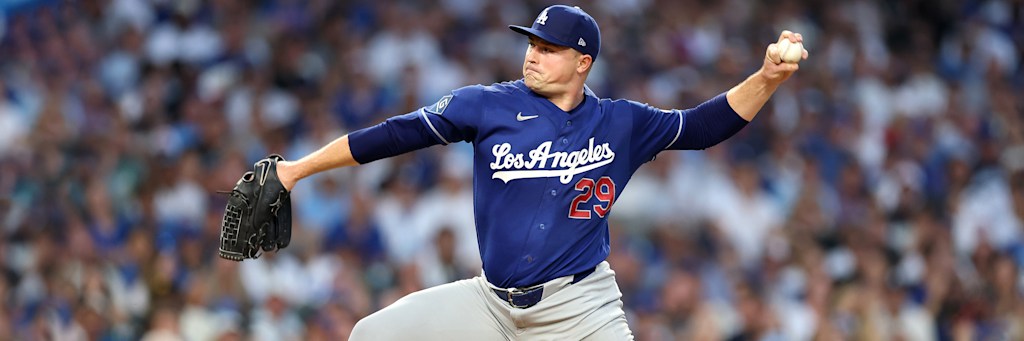
Tarik Skubal and Freddy Peralta made their first start for a new team on the same day. On August 4th, Skubal threw six innings of two-run baseball for the Dodgers against the Cubs, six strikeouts and two walks, exactly what a club expects when it trades three young arms for a two-time Cy Young winner. That same afternoon, at Coors Field, Peralta lasted three and two-thirds innings for Tampa Bay and allowed seven earned runs on nine hits, six days after the Rays sent three prospects to the Mets to get him. Both trades closed within about 48 hours of each other at the deadline. Both pitchers threw their first pitch for a new team on the same calendar date. One looked like the ace his new club paid for. The other looked like a pitcher who needed a week off.
Neither first impression is really what tonight is about.
Three plays, six and a half units, and one of them has nothing to do with either trade at all.
What's On The Card
The Three Plays
- Tampa Bay Rays MONEYLINE (-157) for 3u
- Arizona Diamondbacks team total OVER 4.5 (-135) for 1.5u
- Los Angeles Dodgers RUN LINE -1 (-202) for 2u
Exposure
- Total risked: 6.5 units
- Games involved: 3
- Largest position: Rays moneyline, 3u
- Smallest position: Diamondbacks team total, 1.5u
Rays Moneyline: Twenty-Four Games Is More Than One Bad Start
Tampa Bay is 71-46, the best record in the American League, winners of six straight and 8-2 across its last ten games. Oakland is 47-71, has lost eight of its last ten before a two-game bump against a soft schedule, and carries a 5.41 team ERA that ranks among the worst in baseball. Tampa Bay has 24 more wins than Oakland and Oakland has 25 more losses than Tampa Bay. However the math gets sliced, these two clubs are not playing the same season.
Peralta gets the ball again tonight, six days after the Coors Field disaster. Rays fans do not need to pretend that start did not happen. A 17.18 ERA in his new uniform through 3.2 innings is a real number on the page. But it came at the single most hitter-friendly park in the sport, and Gabriel Hughes, the pitcher on the other side that day, also allowed five earned runs in 5.1 innings. That game was a hitting environment problem as much as a Freddy Peralta problem. With the Mets before the trade, Peralta carried a 4.99 ERA over 113.2 innings, unspectacular, but nowhere near what a converted minor-league yard and this Oakland lineup should turn him into.
Jacob Lopez takes the ball for Oakland, and the honest complication is that he has actually been pitching well lately. His season line, a 5.64 ERA over 75 innings, is ugly, but his last three starts read differently: five shutout innings against Minnesota on July 24th, five and a third with one run allowed against Boston on July 29th, and five innings with nine strikeouts against Cincinnati on August 5th. He is not walking into this game as dead weight.
THE PLAY
What tips this to three units is everything around Lopez rather than Lopez himself. Oakland's bullpen has bled runs behind him all season, its lineup is hitting a thin .243 as a team, and Tampa Bay's own relief corps, a 3.68 team ERA, is built to cover exactly the kind of shaky first two innings a still-adjusting Peralta might give it. At -157 the market is asking for roughly a 61.1 percent winner. A 24-game gap in the standings and nearly a two-run gap in team ERA is more margin than that number requires, even accounting for Peralta's rocky new-team debut and Lopez trending in the right direction.
Diamondbacks Team Total: The Bet That Isn't About Either Trade
Arizona is 63-56, has won its last game, and sits 35-25 at Chase Field. Colorado owns the worst team ERA in baseball at 5.48, is 46-72 overall and 19-40 on the road. Gabriel Hughes, the Rockies starter, carries a 4.25 ERA in limited MLB time and just got hit for five runs in his last outing, the same Coors Field game where Peralta struggled across the diamond from him.
Here is the honest number, stated plainly instead of buried. Arizona has scored five or more runs in only three of its last ten games: a 12-run night in Cleveland on August 1st, a five-run game against San Diego on August 4th, and a 10-run outburst against the Padres on August 6th. The other seven nights, the Diamondbacks scored four runs or fewer. Their season average, 4.51 runs a game, sits just above the number this bet needs them to clear, and a quiet week does not become a loud one automatically just because the opposing staff is bad on paper.
The case for the over rests on who is on the mound for Colorado and what is behind him. Hughes has allowed three or more earned runs in three of his last five starts, and the bullpen waiting behind him owns the sport's worst staff ERA. Michael Soroka takes the ball for Arizona tonight in his own return from the injured list, back from a left glute strain that sidelined him since June 19th; manager Torey Lovullo confirmed the Monday return over the weekend. That has no bearing on Arizona's own bat production, which is the entire subject of this bet, but it is worth knowing why tonight is a notable one in Phoenix independent of the total.
THE PLAY
A 57.4 percent break-even at -135 against a pitcher who has been hittable in three of his last five outings, in front of the league's worst bullpen, is a fair number for a home lineup that has cleared 4.5 runs in three of its last ten games. It is sized at a unit and a half rather than more, because the same ten-game sample says this offense has gone quiet just as often as it has gone off.
Dodgers Run Line: A Banged-Up Team Leaning On Its New Ace
Los Angeles is 70-48, still the better roster on paper, and still 2-8 in its last ten games. That skid included a seven-game losing streak through series losses to Boston and the Cubs and an opening loss to Arizona over the weekend, all of it while the Dodgers were down both catchers: Dalton Rushing with a right UCL tear that puts his season behind the plate in real doubt, and Will Smith sidelined by neck inflammation until at least September. Getting Skubal at the deadline was not a luxury move for this club. It was a rotation running thin at the worst possible time getting patched with the best available arm.
His first start answered every question a front office could ask. Six innings, two runs, six strikeouts, four hits, against a Cubs lineup that does not give away at-bats. Behind him sits a Los Angeles offense scoring 5.01 runs a game, the best mark of any team on tonight's board, playing at what is now officially named Uniqlo Field at Dodger Stadium under a five-year naming deal announced this year. Whatever the outfield sign says, the building is still Dodger Stadium in every way that matters to the scoreboard.
Kansas City is 49-70, 20-40 on the road, and losers of seven of its last ten. Noah Cameron, the pitcher standing in the way tonight, is the complication that needs to be said out loud rather than glossed over. Across his last two starts he has thrown 16 innings and allowed a single earned run, both against Minnesota, striking out 16 and walking three. That is not a struggling fifth starter running out of gas. That is a pitcher throwing the best baseball of his season at the least convenient moment for this bet.
THE PLAY
The run line matters more here than the flat moneyline would. At -1, Los Angeles has to win by two or more runs to cash. A one-run Dodgers win, the kind of game a hot Cameron could easily produce, pushes the bet and returns the stake instead of losing it. That is the entire argument for paying -202 over a cheaper moneyline number: it removes the single outcome, a tight 3-2 or 4-3 final, that a pitcher on this kind of run is most likely to hand you. Two units, not three, because Cameron's last two starts are real and recent, and because a team that has lost eight of its last ten does not get the benefit of the doubt at a heavier price.
What Can Beat This Card
Three things, in order of how likely they are to actually happen.
Noah Cameron is the clearest danger. If he pitches like he has the last two times out, the Dodgers can win this game outright and the ticket still loses on a one-run final. Arizona's own bat is the second risk. The Diamondbacks have gone quieter than their season average says they should over the last ten games, and a fourth straight sub-five-run night is entirely plausible even against a shaky Rockies staff. Third is Peralta simply not having fixed anything from Coors Field. Sutter Health Park is friendlier than Denver, but it is not a pitcher's park either, and a short outing tonight would be the second in a row.
The Bottom Line
Two of these three plays lean on a name that changed teams inside the last ten days, and the honest read on both debuts, one disaster, one gem, is that neither tells the full story by itself. The Rays are simply the better team by nearly two runs of team ERA and 24 games in the standings, regardless of how Peralta's first outing looked. The Dodgers are the better team even while banged up and cold, but the price sits at -1 rather than a flat moneyline specifically because Kansas City's own pitcher has earned the benefit of the doubt his last two times out. Arizona is the one play with no borrowed name attached to it at all: a home lineup against the worst pitching staff in the sport, sized down because that lineup has been quieter than its own numbers this month.
Card FAQ
What are the three BetLegend MLB plays tonight?
Tampa Bay Rays moneyline at -157 for 3 units, Arizona Diamondbacks team total over 4.5 at -135 for 1.5 units, and Los Angeles Dodgers run line -1 at -202 for 2 units. Six and a half units across three games.
Why is the Dodgers play a -1 run line instead of the standard -1.5, and what happens on a one-run win?
At -1, Los Angeles needs to win by two or more runs to cash. A one-run Dodgers win pushes the bet and the stake is returned rather than lost, which is the reason to pay -202 instead of a flatter moneyline price against Royals starter Noah Cameron, who has allowed one earned run across his last two starts.
Why back the Rays moneyline after Freddy Peralta's rough Tampa Bay debut?
Peralta allowed seven earned runs in three and two-thirds innings on August 4th, but that start came at Coors Field, and Oakland's own starter that day, Gabriel Hughes, also allowed five earned runs. Tampa Bay is 71-46 with a 3.68 team ERA. Oakland is 47-71 with a 5.41 team ERA. The gap between the two clubs is bigger than one bad start.
What is Michael Soroka doing on the mound for Arizona tonight, and does it affect the team total bet?
Soroka is making his season return from a left glute strain that sidelined him since June 19th, and manager Torey Lovullo confirmed the Monday start over the weekend. It has no direct bearing on Arizona's own run production, which is what the team total bet is actually about, but it is why tonight is a notable night at Chase Field beyond the betting card.
Why is Noah Cameron's recent form a real risk for the Dodgers run line?
Cameron has thrown 16 innings across his last two starts and allowed a single earned run, both against Minnesota. A pitcher performing at that level can hold the Dodgers to a run or two, which is exactly the environment where a tight one-run Los Angeles win, a push on this bet, becomes a live outcome.
How many runs has Arizona actually been scoring lately, and does that support the team total over 4.5?
Arizona has scored five or more runs in three of its last ten games and four or fewer in the other seven, against a season average of 4.51 runs a game. The bet leans on Colorado's Gabriel Hughes, who has allowed three or more earned runs in three of his last five starts, and the majors' worst bullpen ERA behind him, rather than on Arizona's offense running hot.