 BetLegend
Free Trial
BetLegend
Free Trial
BetLegend
Free Trial
BetLegend
Free Trial
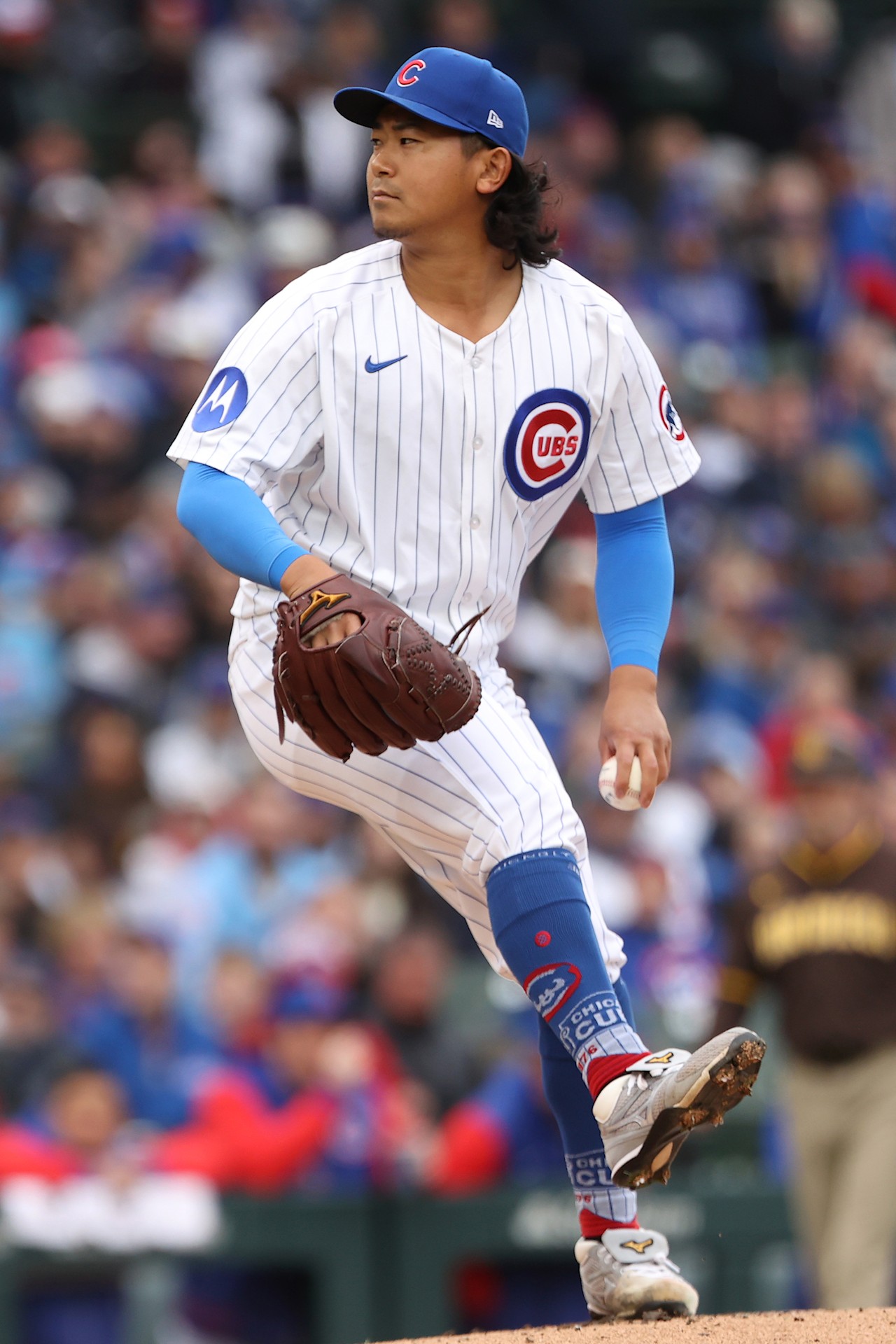
Three starts, zero walks, six home runs. That is Shota Imanaga since the calendar turned to August, and it is the cleanest description of a pitcher anyone will write this season. He puts the ball in the zone, hitters do not get on for free, and every so often one of them hits it into Sheffield Avenue. Monday night the Crosstown series moves to Wrigley Field and the lineup on the other side has hit 164 home runs.
 White Sox vs Cubs

The White Sox are 65-58 and lead the American League Central. They have won three in a row. They walk into Wrigley Field as a +141 underdog.
None of that is a market error. Chicago's American League side has built its season at home, where it is 37-24, and has been a different club away from Rate Field at 28-34. The Cubs are 72-53 overall and 36-26 at Wrigley, and they have outscored opponents by 100 runs on the season, 645 to 545. The gap in the price is the gap between the two road records more than anything else.
What makes the number interesting rather than obvious is the direction each club is traveling. The White Sox have won three straight. The Cubs have lost two straight and sit five games behind Milwaukee in the National League Central with six weeks left, which is close enough to hurt and far enough to require help.
These clubs met three times this season, all of them at Rate Field from May 15 to May 17, and the visitors took the opener 10-5 before losing the next two. The finale went 9-8. Across those three games the two lineups combined for 43 runs, an average of 14.3 a night, in a park that is not especially generous.
That was three months ago and both rosters have changed since, but the shape of it is worth holding onto. These are two home-run-first lineups: 164 for the White Sox and 159 for the Cubs, and neither pitching staff has been able to keep the ball in the yard against the other.
Munetaka Murakami has 28 home runs and a .908 OPS on a .234 average, which is the profile in one line: he does not get many hits and a startling share of the ones he gets leave the park. Miguel Vargas matches him at 28 homers with 72 RBI and a .835 OPS, and Colson Montgomery has 26 homers on a .212 average. Three of the White Sox' regulars are at 26 or more.
The Cubs answer with Pete Crow-Armstrong at .276 with 28 home runs, 75 RBI and a .907 OPS, the most complete season on either roster, and Seiya Suzuki at 21 homers and 73 RBI. Ian Happ has 20 home runs on a .214 average and Alex Bregman is at 16 with a .251 mark.
Imanaga's season is a study in one skill carried to an extreme. He has faced 554 hitters and walked 29 of them, 5.2 percent, and struck out 130. His WHIP is 1.10 and his ERA is 3.74 across 137.1 innings and twenty-four starts. He also leads this matchup, and most of the sport, in a category nobody wants: 28 home runs allowed, which is 1.84 per nine innings.
Read his last five starts in order and the two halves of him are both visible. Seven innings of shutout ball against Minnesota on July 19 on 99 pitches. Six more scoreless against Pittsburgh on July 25. Then 6.2 innings and two home runs against the Yankees on July 31, five innings and a homer against the Dodgers on August 5, and 4.2 innings and three home runs against Washington on August 11. Zero walks in each of the last three. Six home runs in the same span.
Luis Castillo has been the less reliable pitcher and just threw the best game either starter has this year. His season line is 4-9 with a 4.96 ERA, a 1.35 WHIP and 101 strikeouts against 35 walks in 110.2 innings over nineteen starts, with 17 home runs allowed. On August 12 in Cincinnati, against the club he spent six seasons with, he threw seven innings, allowed one hit, walked two and struck out ten on 104 pitches.
The five starts before that were ordinary to bad: five innings and four runs against Tampa Bay on July 10 with three home runs allowed, seven innings and three runs against Cincinnati on July 21, five innings and five runs against the Dodgers on July 28 on eleven hits, and four innings and five runs at Boston on August 6.
594 runs scored, a .240 team average, a .730 OPS and 164 home runs. They strike out 1122 times in 4694 plate appearances, 23.9 percent, one of the higher rates in the sport, and that is the trade they have accepted. The pitching staff carries a 4.11 ERA and a 1.29 WHIP with 1038 strikeouts and 135 home runs allowed in 1098.1 innings, which is a better staff than the club's reputation suggests and the main reason they lead their division.
645 runs, a .248 average, a .754 OPS and 159 home runs, the better offense of the two by roughly half a run a game. The staff sits at a 4.16 ERA and a 1.26 WHIP, close to the White Sox on rate, but with a meaningful difference underneath: 189 home runs allowed in 1117 innings against 135 for the White Sox in nearly the same workload. That is 54 extra home runs, and Imanaga's 28 are a large piece of it.
Whether Imanaga's zone-first approach survives Wrigley in August. A pitcher who does not walk anybody hands the opposing lineup very few free baserunners, which is why his ERA is respectable despite the home run total. The failure mode is specific: solo homers are survivable, three-run homers are not, and the way a hitter gets on in front of one of his mistakes is by getting a hit rather than a walk.
Which Castillo shows up. His last outing was a seven-inning, ten-strikeout, one-hit shutout. His previous four produced 21 innings and 17 earned runs. There is no obvious tell between the two versions in the game log, which is the honest reading rather than a satisfying one.
Whether either bullpen has to work early. Both staffs sit within 0.05 of each other on ERA, so the club whose starter goes deeper is likely to have the better arms available in the seventh and eighth.
DraftKings has the Cubs at -160, an implied 61.5 percent, with the White Sox at +141. The run line is Cubs -1.5 at +129 and the total sits at 8.5 with the over at -108.
The total is the number carrying the most information. Two lineups with 164 and 159 home runs, two staffs that have allowed 135 and 189, and a starting pitcher averaging 1.84 home runs per nine innings, all in a park where the wind decides a great deal. The market has still set this at 8.5, which is only half a run above the league's ordinary number, and that is the market pricing two respectable staff ERAs rather than the home run profiles underneath them.
BetLegend has no position on this game. Monday's card is two moneylines elsewhere on the board, and this page is analysis rather than a play.
The interesting version of this game is not who wins it. It is whether a pitcher who has stopped walking people entirely can keep getting away with the trade he has made. Imanaga has thrown three consecutive starts without issuing a walk and has surrendered six home runs across them, and Monday he faces a lineup with 164 of them, three separate hitters at 26 or more, and a willingness to strike out 23.9 percent of the time in exchange.
Everything on this page comes from official league statistics pulled today and the current DraftKings board. Lineups had not posted at publication and prices can move.