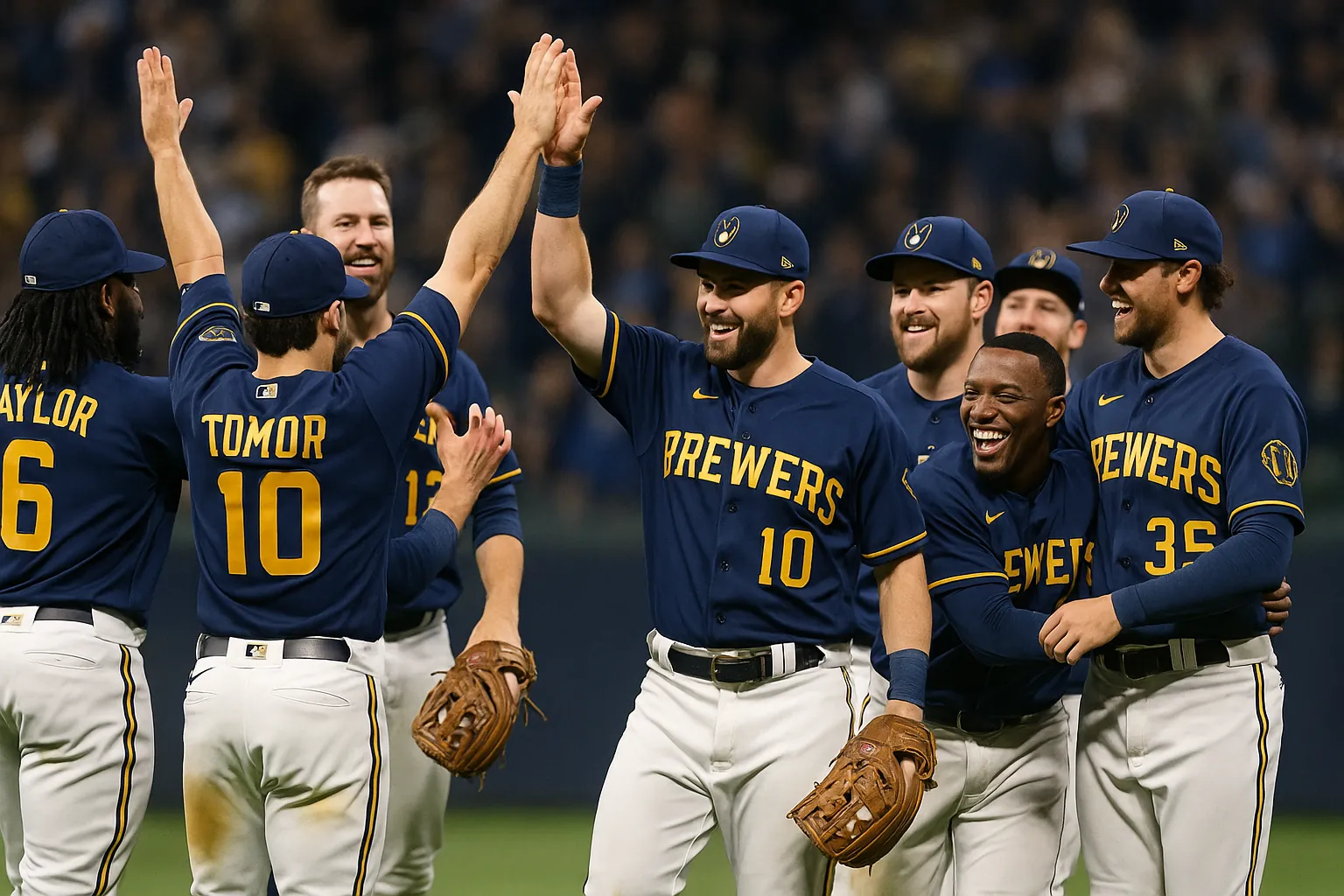
The MLB add for BetLegendPicks is Milwaukee Brewers moneyline -139 against the San Diego Padres on Thursday, May 14, 2026. The matchup is clean enough for a side: Griffin Canning for San Diego, Kyle Harrison for Milwaukee, and a Brewers club playing at home with the starting-pitching edge and a price that has not crossed into tax territory.
This is not a blind home favorite. The Padres have enough lineup depth to punish mistakes, and a moneyline near -140 still asks Milwaukee to clear a meaningful win-probability bar. The reason the bet is worth playing is that the Brewers own the more stable path: a left-handed starter in better current form, a bullpen handoff that can be managed from leverage, and a home setting where one or two early runs can change how San Diego has to use Canning.
BetLegend Pick
The Pitching Matchup Drives The Bet
MLB's probable-pitcher board lists Griffin Canning for San Diego and Kyle Harrison for Milwaukee. That is the center of the handicap. Canning's early Padres sample has been uneven, with a 6.75 ERA through limited work, while Harrison enters in a much stronger run-prevention lane at 3-1 with an ERA in the low-to-mid 2.00s and strikeout production that gives Milwaukee an answer when San Diego puts men on base.
Small samples can lie, and that matters with both starters. Canning is not automatically a broken pitcher because of a rough early ERA. Harrison is not guaranteed to carry a sub-3.00 profile forever. But we are not pricing the next three months. We are pricing this one game. In this one game, Harrison's form, handedness, and ability to miss bats give the Brewers the better first-half foundation.
Why Milwaukee At -139 Is Playable
A -139 moneyline implies roughly a 58.2 percent break-even probability. That is a fair ask for a home team with the starting-pitching advantage, but it is not a number we should chase blindly. I would rather play Milwaukee in this range than lay a heavier run line or force a first-five market without seeing the full price.
The Brewers do not need to dominate the box score to cash this. A 4-3, 5-3, or 3-2 win is enough. Harrison can give Milwaukee five or six competitive innings, the offense can pressure Canning into traffic, and the bullpen can be deployed with a lead or tied game. That is a smoother route than needing San Diego's offense to disappear completely.
How The Padres Can Beat It
The Padres are live because their offense is not built on one hitter. They can make a pitcher work, they have enough right-handed pressure to challenge a lefty, and Canning is capable of giving them a competitive start if his command is sharper than the surface numbers suggest. If San Diego gets Harrison into deep counts early, this becomes more of a bullpen game than Milwaukee wants.
That is the main risk. The second risk is price movement. At -139, the Brewers are playable. If the market drifts into the -155 or -160 range, the edge gets thinner because San Diego's offensive ceiling is real. The number matters here. This is a 2-unit position at the posted price, not an invitation to chase.
The Harrison Edge
Harrison's profile matters because the Padres are not a lineup you want to beat only with contact management. You need strikeouts in leverage. A left-handed starter who can miss bats gives Milwaukee a way to protect innings with runners aboard. That is especially important against a road lineup that can flip the game with one extra-base hit.
Milwaukee also benefits from the way Harrison lets the Brewers plan the middle innings. If he is efficient through the first two trips, the Brewers can avoid exposing lower-leverage relief arms too early. If he hits trouble in the sixth, the bullpen can be used aggressively because this is a single-game moneyline position, not a long-series preservation spot.
The Canning Question
Canning is the uncertainty. His 2026 line entering this start is ugly on the surface, but the sample is not large enough to treat him as an automatic fade every time out. The better framing is that San Diego needs him to be better than what he has shown so far. Milwaukee only needs the current version to remain somewhat unstable.
If Canning is behind in counts, the Brewers can create traffic without needing three homers. If he gives Milwaukee free baserunners, the game quickly tilts toward a home bullpen plan. That is the kind of pressure a home favorite should create when the price is still in the -130s.
| Factor | Padres | Brewers |
|---|---|---|
| Starter | Griffin Canning, uneven early run prevention | Kyle Harrison, stronger form and strikeouts |
| Venue | Road spot | American Family Field |
| Bet type | Fade only through side | Moneyline avoids run-line variance |
| Price | Padres plus-money has upset appeal | -139 remains playable |
Final Word
The Brewers are the right side because the path is cleaner. Better current starter, home field, and a price that still sits below the uncomfortable favorite tier. San Diego can absolutely make this difficult, but the Padres need Canning to stabilize and the lineup to solve Harrison often enough to overcome Milwaukee's home edge.
The official play is Milwaukee Brewers moneyline -139 for 2 units. I would play it to roughly -145. Past that, the bet becomes more price-sensitive and less attractive. At the number on the sheet, Milwaukee is the side.
San Diego Padres
- Starter: Griffin Canning
- Road spot: Milwaukee
- Threat: Lineup depth
- Risk to bet: Early traffic vs Harrison
Milwaukee Brewers
- Pick: Moneyline -139
- Starter: Kyle Harrison
- Venue: American Family Field
- Stake: 2 Units
The Number
- Break-even: About 58.2%
- Play to: -145
- Avoid: Run line substitute
- Published: May 14, 2026
Verification notes: Probable starters, game date, and listed pitcher snapshots were checked against MLB's probable-pitcher board for May 14, 2026 before publication.
Source: MLB probable pitchers.
For more BetLegend picks, model notes, and verified betting records, visit the homepage or the track record.