 Dallas Stars @
  Colorado Avalanche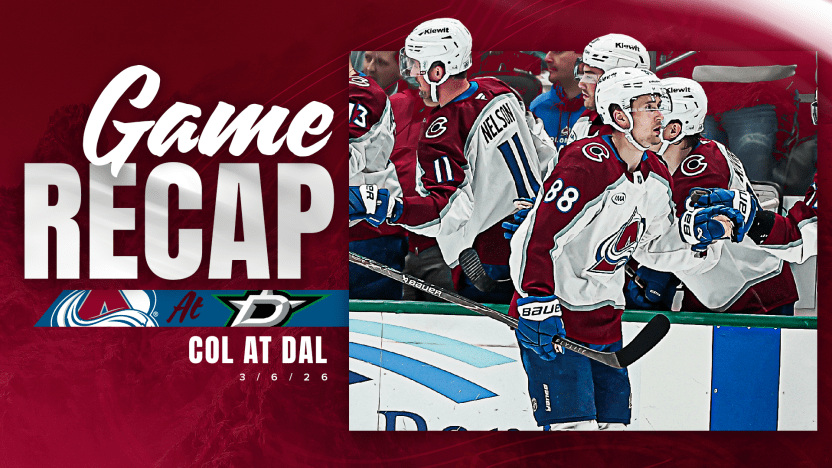
- Why This Game Matters: First Place in the Central
- March 6 Rematch: What We Learned
- Dallas Stars Offensive and Defensive Profile
- Colorado Avalanche: MacKinnon and the Mile High Machine
- Injury Impact: Dallas Missing Three Key Forwards
- Goaltending Matchup: Oettinger vs Blackwood
- Special Teams Breakdown
- Keys to Victory for Both Teams
- Final Thoughts
- Frequently Asked Questions
This is the game the entire Western Conference has been waiting for. The Dallas Stars (42-15-10, 94 points) visit the Colorado Avalanche (44-13-9, 97 points) in a clash between the top two teams in the Central Division, and quite possibly the two best teams in the entire Western Conference. Just three points separate them in the standings with fewer than 20 games remaining. Colorado won the last meeting 5-4 in a shootout on March 6 in Dallas, and the rematch carries even higher stakes as both clubs jockey for home-ice advantage through the playoffs. The Avalanche are -155 home favorites at Ball Arena, with Dallas sitting at +130 and the total set at 6.5 goals. 9:30 PM ET on TNT and HBO Max. This one deserves every bit of the primetime spotlight.
Why This Game Matters: First Place in the Central
Let's put the stakes in perspective. A Dallas win here cuts Colorado's Central Division lead to a single point. An Avalanche victory pushes that gap to five points and gives Colorado a stranglehold on the division title with the season winding down. This isn't just another regular season game between good teams. This is the kind of late-season matchup that carries legitimate playoff seeding implications, and both clubs know it. The winner of the Central Division earns home-ice advantage through the first two rounds of the Stanley Cup Playoffs, and in a conference this deep, that edge could be the difference between a long run and an early exit.
What makes this matchup so compelling is the contrast in how these two teams are built. Dallas plays a structured, defensively responsible brand of hockey that suffocates opponents. Their 2.61 goals against per game is among the best in the NHL, and they're the kind of team that makes you earn every single scoring chance. Colorado, on the other hand, is a high-octane offensive juggernaut that scores at 3.80 goals per game, the kind of firepower that can bury opponents in transition before they know what hit them. When these two styles collide, you get appointment television. When they collide with division supremacy at stake? That's a different level entirely.
Both teams have dealt with adversity in the last two weeks. Dallas snapped a franchise-record 15-game point streak with a 6-3 loss to Utah on March 16, and the Stars are battling through a brutal run of injuries to key forwards. Colorado dropped two straight (a 3-1 loss at Winnipeg and a humbling 7-2 home loss to Pittsburgh on March 16), and they're looking to avoid a three-game skid for the first time all season. There's an edge to this game that goes beyond the standings. Both teams have something to prove, and both have reasons to come out firing.
March 6 Rematch: What We Learned 12 Days Ago
These two went at it on March 6 in Dallas, and it was everything you'd expect from a Central Division heavyweight fight. Colorado took a 5-4 shootout win in a game that went back and forth like a tennis match, with neither team able to grab control for more than a few minutes at a time. Valeri Nichushkin scored the shootout winner for Colorado, but the real story was the combined eight goals in regulation and overtime. These teams do not play boring hockey against each other.
The March 6 game revealed a few things worth monitoring tonight. First, Dallas's blue line had trouble containing Colorado's speed through the neutral zone, particularly when Nathan MacKinnon and Martin Necas got the puck with room to skate. Second, Colorado's defense was far from airtight, giving up four goals to a Dallas team that was missing key pieces of its offense. And third, the goaltending on both sides was workmanlike but not dominant, suggesting that this matchup favors the team that can generate the most high-quality chances rather than the team that locks things down defensively. If March 6 was a preview of what this rivalry looks like in April and May, hockey fans are in for a treat.
Dallas Stars: Offensive and Defensive Profile
The Stars have been one of the most consistent teams in hockey all season, and their 42-15-10 record reflects a team with very few weaknesses when healthy. Jason Robertson has been sensational with 72 points (34 goals, 38 assists) through 61 games, establishing himself as one of the premier two-way forwards in the league. Wyatt Johnston's breakout continues with 29 goals, and the young center has the kind of finishing ability that gives goalies nightmares. Miro Heiskanen anchors the defense with 55 points and elite two-way play from the back end, and he's been asked to shoulder an even heavier load with the forward group decimated by injuries.
The problem is who's not available. Roope Hintz is out for an extended period with a lower-body injury, robbing Dallas of their top-line center and one of the most dynamic two-way forwards in hockey. Tyler Seguin is done for the season and playoffs with a knee injury, removing another veteran presence from the middle of the lineup. And Mikko Rantanen, acquired via trade from Carolina earlier this season, is on injured reserve with a lower-body issue and has resumed skating but isn't close to returning. That's three legitimate top-six forwards missing from the lineup, and it puts an enormous burden on Robertson, Johnston, and Matt Duchene (32 points) to carry the offensive load.
Defensively, the Stars remain one of the stingiest teams in the league even without their full forward group. Their 2.61 goals against per game speaks to the structure and discipline that head coach Pete DeBoer demands. Esa Lindell leads the team with a +28 plus/minus, and the defensive corps as a whole does a tremendous job of limiting grade-A scoring chances. But Colorado's offense is a different animal than most opponents, and the question is whether Dallas's depleted forward group can maintain the defensive checking required to slow down MacKinnon and company without sacrificing their own offensive production.
Colorado Avalanche: MacKinnon and the Mile High Machine
Nathan MacKinnon is having what might be the best season of his career, and that's saying something for a player who already has a Hart Trophy on his shelf. His 105 points (45 goals, 60 assists) through 62 games puts him in the conversation for another MVP, and his +56 plus/minus underscores just how dominant the Avalanche are when he's on the ice. MacKinnon doesn't just create offense. He tilts the ice. When he has the puck on his stick in the neutral zone with speed, there might not be a more dangerous player in hockey. Dallas saw it firsthand on March 6, and they'll see it again tonight.
But Colorado isn't a one-man show, and that's what makes them so dangerous. Martin Necas has exploded with 81 points (31 goals, 50 assists), giving the Avalanche a legitimate second scoring threat that forces opponents to choose who they're going to try to shut down. Cale Makar continues to be the best defenseman in hockey with 60 points (17 goals, 43 assists) and his ability to jump into the rush creates odd-man opportunities that most teams simply can't replicate. Brock Nelson has added 30 goals and 55 points, giving Colorado scoring depth through four lines that few teams in the league can match.
The Avalanche are scoring 3.80 goals per game and allowing just 2.42 goals against per game, a combination that creates an absurd goal differential of +79 on the season. That differential tells you everything you need to know about how good this team is. They outscore you, they outdefend you, and they do it at altitude in Denver where visiting teams regularly run out of gas in the third period. The thin air at Ball Arena is a real factor, particularly in late-season games when fatigue accumulates, and Colorado has used their home-ice advantage ruthlessly all season long.
Injury Impact: Dallas Missing Three Key Forwards
Dallas Stars InjuriesColorado Avalanche InjuriesThe injury disparity is significant and could be the defining factor in this game. Dallas is missing three legitimate top-six forwards in Hintz, Seguin, and Rantanen. That's an enormous amount of production, leadership, and two-way ability removed from the lineup. The Rantanen angle adds a fascinating layer to this rivalry, as the star winger was dealt from Colorado to Dallas and now sits on injured reserve while his former team and his current team battle for division supremacy. Colorado has injuries of their own, particularly Landeskog and Lehkonen, but the Avalanche's depth has allowed them to absorb those losses more effectively than Dallas has absorbed theirs.
Goaltending Matchup: Oettinger vs Blackwood
Jake Oettinger has been the backbone of Dallas's season, and his ability to steal games when the offense goes quiet has been critical to the Stars' success. The 27-year-old is a big-game goaltender who thrives under pressure, and his positioning and rebound control give Dallas a fighting chance even when they're outshot. In a game where Dallas is likely to be outpossessed by Colorado's relentless attack, Oettinger's ability to make the first save and control the areas around his crease will be absolutely crucial. He played in the March 6 meeting and, despite the shootout loss, was solid through regulation and overtime.
On the Colorado side, Mackenzie Blackwood has stepped into the starting role and given the Avalanche dependable goaltending. Blackwood is a solid positional goalie who has benefited from playing behind one of the best defensive structures in hockey, with Makar and the Colorado blue line doing an excellent job of limiting high-danger chances. However, Blackwood's history suggests he can be vulnerable when he faces extended periods of pressure, and if Dallas can generate sustained zone time, there are opportunities to be found. The 7-2 loss to Pittsburgh on March 16 is a reminder that Blackwood can have rough nights, and the Stars will be looking to test him early and often.
Special Teams Breakdown
Here's where things get really interesting. Dallas's power play is operating at a blistering 33.0%, good for second in the entire NHL. That's an elite conversion rate that punishes opponents for every trip to the penalty box. Robertson, Johnston, and Heiskanen run the power play with precision, and even without Rantanen and Hintz, Dallas has the skill to make teams pay on the man advantage. If Colorado takes undisciplined penalties, Dallas can absolutely swing this game on the power play alone.
Colorado's power play, on the other hand, has also been excellent at 31.7%, ranked 5th in the league. For a team with MacKinnon, Makar, and Necas, that number is a testament to their loaded roster. With MacKinnon, Makar, and Necas running the unit, the Avalanche are lethal when opponents take penalties. Their penalty kill sits at 85.8% (5th in the NHL), which partially compensates, making Colorado elite on both sides of special teams, which means this game will likely be decided at five-on-five where Colorado's depth advantage is most apparent.
Dallas's penalty kill is respectable at 83.3% (7th in the NHL), and they'll need it to hold up if they want to stay in this game. The Stars have been disciplined about staying out of the box for most of the season, but Colorado's speed and skill can draw penalties simply by forcing defenders into reactive positions. If Dallas can stay out of the box and get a couple of power play opportunities of their own, the special teams battle heavily favors the Stars. That's a significant potential edge in what projects to be a tight game.
Keys to Victory
Dallas Stars: How They Win in DenverColorado Avalanche: How They Extend the Division LeadFinal Thoughts
This is the best regular season NHL game of the week, and it's not close. Two legitimate Stanley Cup contenders, separated by three points in the standings, meeting on national television with division supremacy hanging in the balance. Colorado's home-ice advantage at Ball Arena is real, the thin air at altitude wears down visiting teams, and the Avalanche crowd for these kinds of games creates an atmosphere that's as intense as anything in the playoffs. The -155 moneyline reflects Colorado's overall superiority on paper, and the 6.5 total suggests oddsmakers expect another high-event game similar to the March 6 shootout.
Dallas's injury situation is the elephant in the room. Losing Hintz, Seguin, and Rantanen is the kind of forward depletion that would cripple most teams, and the fact that the Stars are still sitting at 94 points with that kind of attrition speaks volumes about their organizational depth and coaching. But there's a limit to how much depth can compensate for top-end talent, and going into Ball Arena against MacKinnon, Necas, Makar, and the rest of Colorado's arsenal with a patched-together forward group is a tall order. Robertson and Johnston will need to be spectacular, and Oettinger will need to be a wall.
The special teams battle could absolutely decide this game. If Dallas can stay out of the box and convert their own power play opportunities at anything close to their 33.0% season rate, they have a path to victory even on the road. If Colorado can leverage their excellent 31.7% power play for one night, or simply dominate at five-on-five like they're capable of doing, the Avalanche can push that division lead to five points and establish clear separation. Whatever happens, this is the kind of game you build a season around. Two teams, one division, and a whole lot of hockey left to play.
Frequently Asked Questions
Content is for entertainment and informational purposes only. Always gamble responsibly.